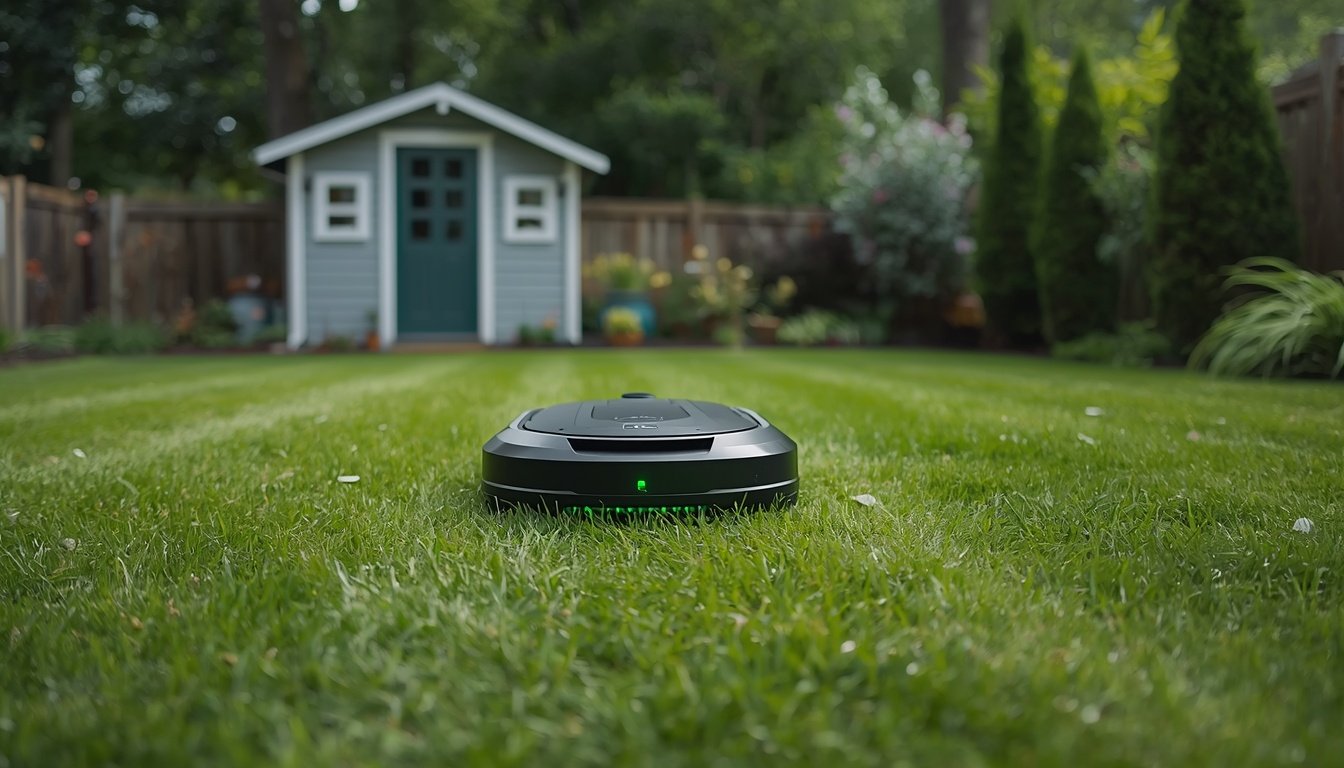
Robot lawn mowers do not collect grass clippings in a container or bag. Instead, they use a mulching method that finely chops the grass as they cut. The small clippings are left directly on the lawn, where they quickly break down and act as natural fertilizer.
How It Works
Robot mowers are designed to cut small amounts of grass frequently, making only slight trims with each pass. The cutting mechanism consists of sharp rotating blades that slice grass into tiny pieces. These clippings are left behind and settle among the lawn, eliminating the need for a collection bag or manual disposal.
This approach is different from traditional mowers with bags or rear discharge bins. Since the robot typically mows several times per week, no large piles of clippings accumulate. The finely mulched grass quickly decomposes and supports healthy lawn growth.
What It Can Do
Mulching mowers, including wire-free robot lawn mowers, offer several practical benefits through their grass handling system. Because they do not collect clippings, there are advantages for both user convenience and lawn health.
- Chop grass into small, fine clippings that are barely visible after mowing
- Distribute mulched clippings evenly across the lawn surface
- Support lawn nutrition by decomposing and returning nutrients like nitrogen to the soil
- Eliminate the need to empty or dispose of clippings
By relying on constant trimming and mulching, robot mowers keep clippings at a manageable size, even as they operate on a regular schedule. This process maintains a tidy appearance and can reduce the need for supplemental fertilization.
It is important to note that the effectiveness of mulching depends on cutting only a small amount at a time. If the grass is allowed to become too long before mowing, clippings may become more noticeable or clump together, temporarily impacting the lawn’s look. Frequent, small cuts are the key to unobtrusive mulching.
Limitations and What It Cannot Do
While robot lawn mowers provide efficient mulching, there are specific limitations to their approach. They cannot collect or store grass clippings for disposal, as there is no built-in bagging system. This means they are not well suited to situations where removal of clippings is desired or required.
Other potential limitations include:
- Robot mowers do not perform well when mowing very long, wet, or thick grass, as clippings may clump or smother spots on the lawn
- If extra debris, leaves, or heavy thatch is present, the mower will not collect or remove it; separate cleanup is necessary
- They are not designed to pick up pet waste, sticks, or garden debris
- In rare exceptions, some commercial robotic mowers offer collection options, but these are not standard on home models
For homeowners who expect a finished lawn entirely free of visible clippings after mowing, a robot mower may not fully align with those expectations. Additionally, during the first mow of the season or after a period of fast growth, more visible clippings may linger until the grass is restored to an optimal length.
Regardless, users should plan for regular maintenance and occasional manual removal of excess debris, especially if environmental factors cause heavier clippings than normal. Understanding these limitations helps set accurate expectations about daily maintenance and long-term lawn management.
When It Works Best
Wire-free robot lawn mowers are most effective when used frequently, typically several times per week. This scheduling prevents significant grass growth between mowing sessions and produces the fine clippings that decompose quickly. The system works best on lawns that are relatively free of large debris, leaves, or other organic matter that could interfere with mowing.
Optimal performance is achieved in areas with moderate grass types and steady, manageable growth rates. If the lawn is maintained regularly, clippings remain nearly invisible, and no collection is needed. For challenging conditions—like new lawns or after extended absences—a traditional mower or additional cleanup may be preferred before resuming robot operation. For a full overview of capabilities, see the wire-free robot lawn mower guide.
Common Misconceptions
Some users assume that robot mowers have a bag or compartment to capture grass clippings, but this is not the case. Another common misconception is that mulched clippings will be unsightly or harmful to the lawn, when in fact they typically contribute beneficial nutrients unless grass is excessively long or wet.
Final Answer Summary
Robot lawn mowers do not collect or bag grass clippings. They mulch grass into tiny pieces left behind as natural fertilizer, relying on frequent mowing for best results. Understanding their limitations and maintenance requirements is important for proper lawn care and setting realistic expectations.