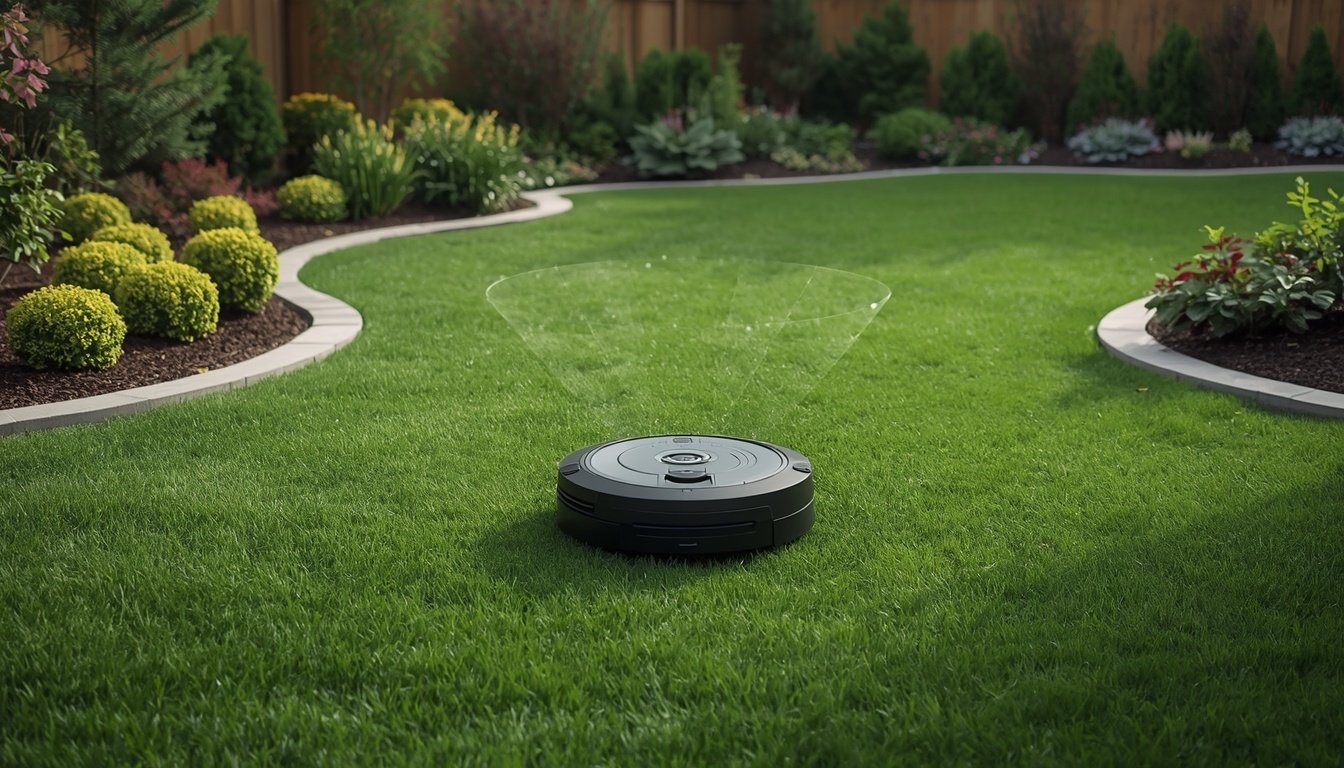
Most robot mowers cannot reliably avoid dog toys unless they are equipped with advanced obstacle detection. Basic models often bump into or roll over smaller pet items. If you leave dog toys on the lawn, only specific robots with smart sensors may be able to steer clear of them every time.
How Robot Lawn Mowers Detect Objects
Robot lawn mowers use a combination of sensors to avoid objects in their path. Entry-level models generally rely on simple bump sensors that only detect an obstacle after making contact. This means small or soft toys may not stop the mower at all, especially if they are low to the ground or partly hidden in grass.
More advanced mowers include ultrasonic or camera-based systems. These try to spot toys and other unexpected objects before contact. Still, their accuracy can vary. Brightly colored, rigid toys are easier to detect than soft, flat, or earth-toned items that blend into the lawn.
In many cases, even with decent sensors, small toys can be overlooked—especially at dusk or in uneven terrain. The safest approach is to pick up pet toys before mowing begins. If avoiding pet items automatically is important, look for models that mention sophisticated object recognition in their features.
What Happens if a Mower Hits a Dog Toy?
If a robot mower runs into an undetected dog toy, the results depend on both the mower and the toy’s size and toughness. Lightweight toys may get pushed aside or even shredded by the mower’s blades. Hard or large toys can trigger the mower’s bump sensor, causing it to reverse and change direction.
Soft or squishy toys often get run over with little resistance. These can get tangled in the blades or wheels, sometimes stopping the mower or causing damage. Repeated contact may also spread toy fragments over your lawn or even jam mower parts.
To reduce mishaps, most manufacturers advise checking the grass for toys, sticks, or debris before activating your mower. Some users have found that durable or motionless toys are less easily detected, making manual removal essential for a trouble-free mowing session.
- Soft, small dog toys are rarely detected before contact.
- Larger, hard toys may trigger bump sensors.
- Rubbery or flexible items can get tangled or damaged.
- Advanced mowers avoid more objects, but not all items.
- Brightly colored toys are easier for cameras to see.
While improved sensors help some mowers avoid common obstacles, no model is guaranteed to spot every dog toy every time. Soft or camouflaged toys are the main risk. Picking up toys before mowing prevents damage to both your pet’s belongings and your robot. If you want automatic avoidance, be sure to check out machines specifically marketed for obstacle recognition. For suggestions, review the guide on best robot lawn mowers with obstacle avoidance for recommended options.
Best Practices for Pet Owners
For families with dogs, keeping the mowing area clear is the most reliable way to prevent issues. Make it a habit to collect your pet’s toys before scheduling an automated mow. This reduces the chances of damage to both toys and your mower, and ensures smooth operation every time.
If your schedule is busy, consider training your dog to play in a different part of the yard when the mower is running. Alternatively, set up designated play zones that stay outside the mower’s route. Marking these areas can help both pets and humans avoid crossing paths with the robot.
Investing in a mower with high-tech sensors is helpful, especially for larger yards with unpredictable obstacles. However, even the best machines work more effectively when the path is kept clear. Regularly checking for toys and debris is a small extra step for an easier, safer mowing routine.