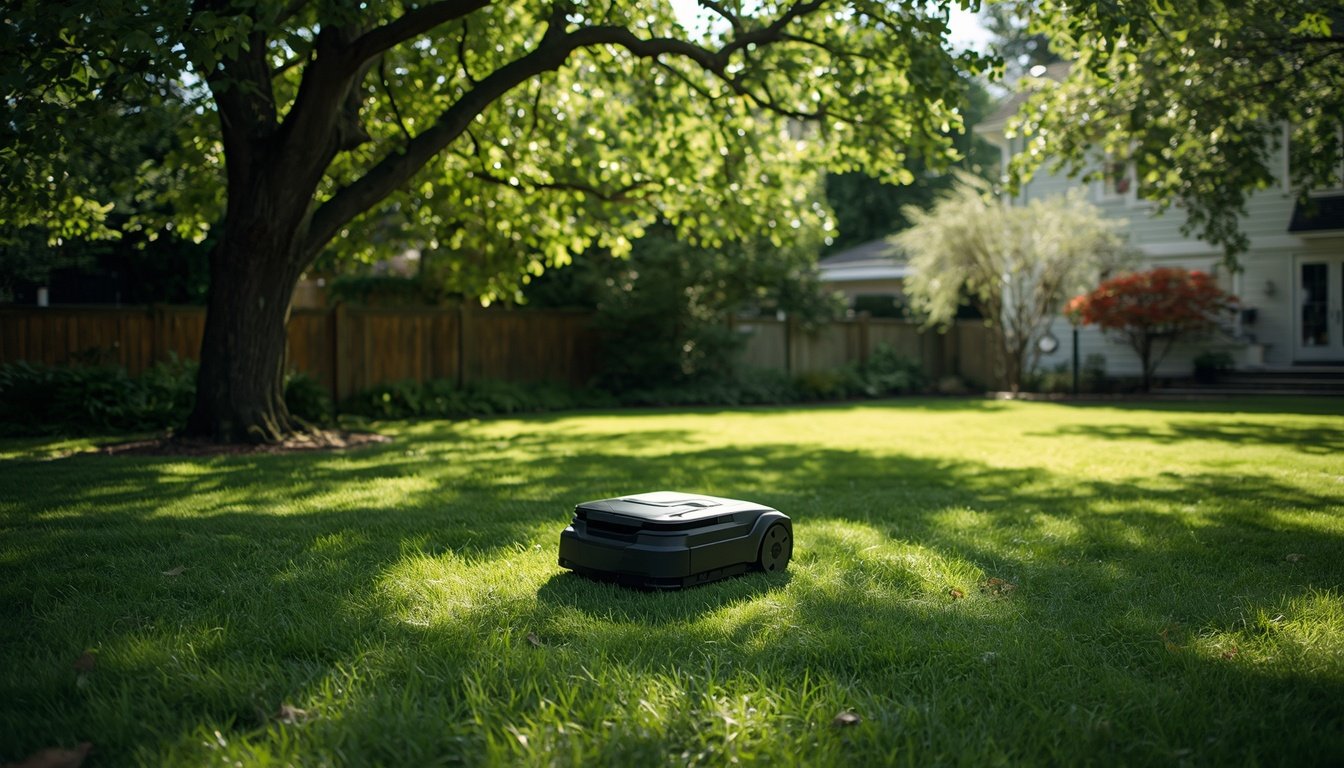
No, it is not recommended to let a robot mower run on wet grass. Wet grass can clog the mower’s blades and housing, causing strain on the motor and resulting in uneven cuts. This can also increase the risk of the robot slipping or getting stuck, potentially damaging both the mower and your lawn. Unless your specific model’s manual explicitly states otherwise, waiting until the lawn is dry is the safest and most effective approach.
Why Mowing Wet Grass Causes Problems
One of the main issues with mowing wet grass is clumping. Wet blades stick together and form heavy clumps that a robot mower cannot disperse. This not only leaves the lawn looking messy but can also clog the mower’s deck and blades.
Another concern is the increased load on the mower’s motor. Wet grass is heavier and harder to cut, so the mower must work harder. This can reduce both battery life and the overall lifespan of the mower. Electronics and moisture are also a bad combination. Even if your mower is designed for outdoor use, consistent exposure to moisture increases the risk of corrosion or short circuits over time.
Lastly, wheels may lose traction on slick, wet surfaces. This increases the chances that your robot will get stuck or leave tracks on the lawn. For details on how much water your device can handle, see our guide: are robot lawn mowers waterproof.
Risks for Your Lawn and the Mower
Letting a robot mower operate on wet grass can damage your lawn’s appearance. Wet soil is soft and more prone to being compacted by the robot’s wheels, which can cause ruts and affect new grass growth. The mower’s movement across a waterlogged lawn may also result in patches of dead grass.
Cutting wet grass tears rather than cleanly slices grass blades. These ragged edges make the grass more vulnerable to disease. Wet clippings left behind can suffocate healthy grass underneath, inviting fungal issues and causing brown spots.
Besides impacting the lawn, the mower itself is at risk. Water can find its way into mechanical parts and increase the chance of rust. Even if sealed, repeated exposure to wet conditions stresses seals, bearings, and joints. Long-term, this can shorten the life of your mower and result in costly repairs.
Best Practices for Avoiding Wet Mowing Issues
- Wait for the grass and soil to dry before running your robot mower.
- Set scheduled mow times during dry periods or after morning dew has evaporated.
- Clean the mower thoroughly if it accidentally runs on wet grass.
- Check and maintain the mower’s blades to ensure optimal cutting.
- Review your mower’s manual for specific guidance on wet weather use.
Following these best practices helps avoid problems caused by wet mowing. Waiting until the lawn is dry ensures a cleaner cut, reduces clumping, and protects the health of your grass. Routine cleaning and maintenance after use in damp conditions can prolong the life of your robot mower. Double-checking your schedule and local weather can also help automate mowing during optimal conditions, reducing risk for both your yard and the mower itself.