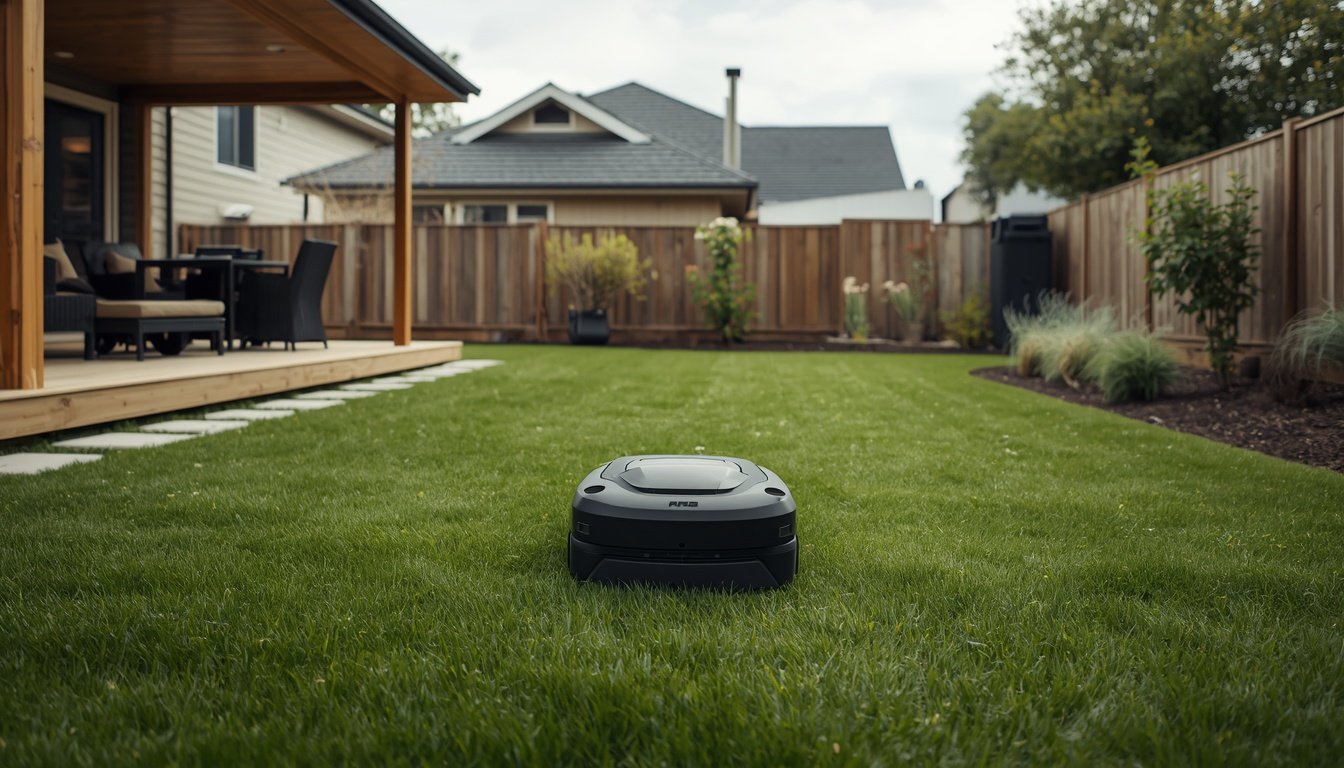
Many homeowners believe wire-free robot mowers are unreliable, hard to set up, or ineffective – but these concerns are mostly unfounded. Modern wire-free models use advanced navigation and are remarkably simple to install and maintain. If you’re hesitating because of these doubts, rest assured that these robots work well for most lawns and require much less hassle than the older, wired mowers.
Myth 1: Wire-Free Robot Mowers Can’t Navigate Accurately
A common misconception is that wire-free robot mowers get lost or miss parts of the yard. In reality, today’s devices use GPS, sensors, and smart navigation algorithms to track their position with impressive precision. They can map your lawn, remember its shape, and mow in efficient patterns that cover all areas, even around trees and flower beds.
Early models sometimes struggled with tricky landscapes, but newer units have fixed these issues with improved obstacle detection and better learning over time. Most also offer app connectivity, letting you monitor their progress and adjust zones if needed. If your yard has unique features, you can customize their mowing boundaries in-app, ensuring nothing gets overlooked. While accuracy depends on setup and yard complexity, most users find that wire-free mowers reliably keep their lawns evenly maintained without constant supervision. These navigation improvements have made wire-free models a practical choice for homeowners who want a tidy yard with minimal effort.
Myth 2: Setup and Maintenance Are Complicated
Some people avoid wire-free robot mowers because they fear complicated setup or constant maintenance. However, one of the biggest benefits of wire-free systems is just how easy they are to get started. There’s no need to dig or lay physical boundary wires, which saves hours of labor compared to traditional systems. Most wire-free robots simply require you to place the charging station, define your lawn area in the app, and let the mower do the rest.
Maintenance for wire-free mowers is generally minimal. Basic care includes clearing debris from the mower, cleaning the blades regularly, and updating software when prompted by the app. Some higher-end models perform automatic updates and diagnostics to streamline upkeep. Seasonal checks—such as keeping sensors clean and charging the battery before storage—are standard and simple. Overall, wire-free systems make robot mowing less hands-on and far less frustrating. Anyone comfortable with modern smart devices can handle the setup and routine maintenance easily, making the experience approachable for most homeowners.
Common Myths Versus Reality
- Wire-free mowers never get lost or stuck
- They only work on flat, basic lawns
- Signal interference makes them unreliable
- Mowing results are patchy and uneven
While it’s true that no mower is perfect, wire-free robots are far more capable than these myths suggest. Occasional obstacles or dense bushes may require you to make minor adjustments, but these mowers adapt well to a variety of yard shapes and slopes. Signal interference is rare with modern tech, and results are typically smooth. If you want to learn how these systems really work in detail, the comprehensive wire-free robot lawn mower guide is a great starting point for clearing up any remaining doubts. Ultimately, these mowers are designed for convenience and reliable results for a wide range of homeowners.