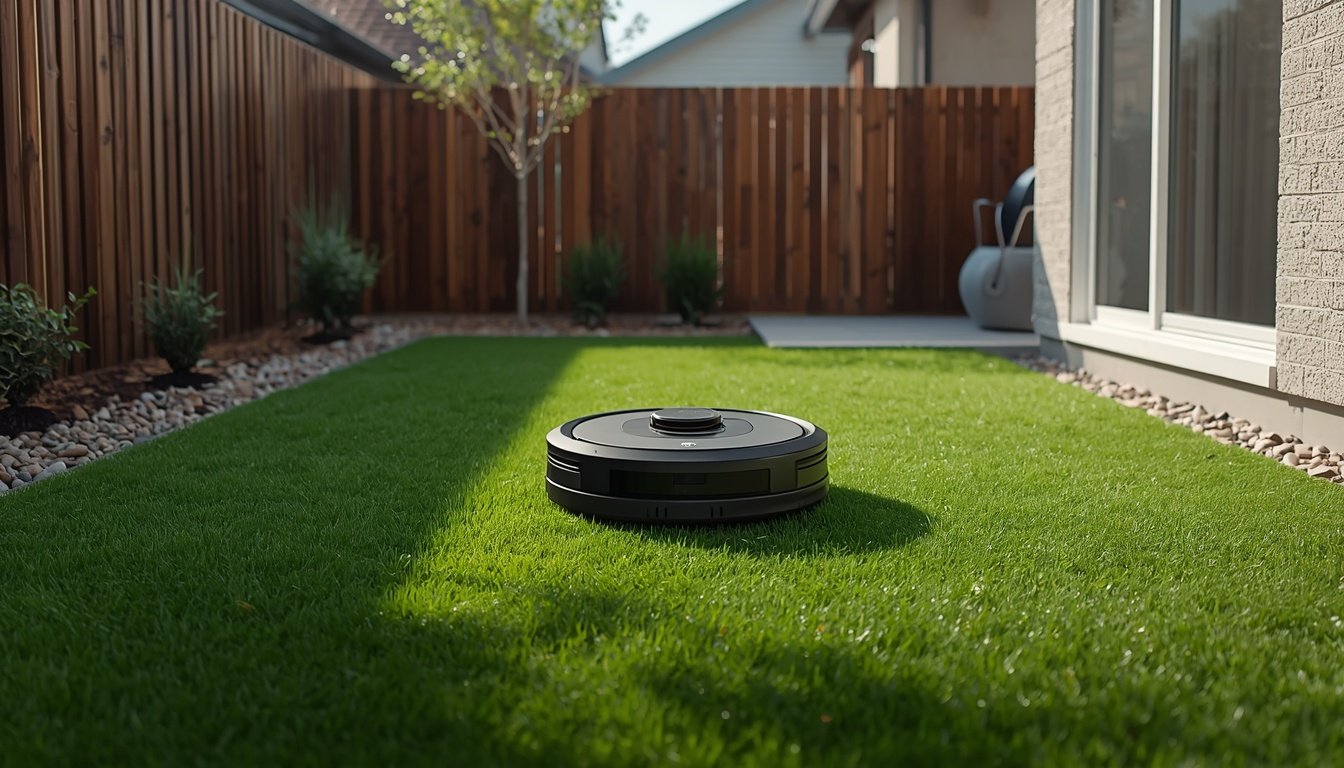
A wire-free robot lawn mower is a type of robotic mower that does not require a physical boundary wire installed in the ground to define its mowing area. Instead, it uses wireless technologies such as GPS, sensors, or virtual mapping systems to detect and stay within the designated lawn space. This approach offers a different setup and operating process compared to traditional robot mowers with boundary wires.
How It Works
Wire-free robot lawn mowers rely on advanced positioning systems and sensors to navigate the lawn without the need for buried wires. These mowers often use a combination of GPS, inertial measurement units, onboard cameras, and radar or ultrasonic sensors. The technology enables them to create and remember a virtual map of the lawn’s boundaries and obstacles.
Owners typically set up the mowing area by guiding the robot or drawing boundaries on a mobile app. Once set, the mower uses real-time location and sensor data to track its position and follow the defined virtual perimeter while avoiding objects and obstacles.
What It Can Do
Modern wire-free robot lawn mowers offer several practical features designed to simplify lawn care and adapt to various garden layouts. They can handle a range of yard sizes and use smart navigation to optimize their mowing routes.
- Maintain lawns by automatically cutting grass within digitally marked boundaries.
- Navigate around fixed obstacles such as trees, flower beds, and garden furniture using sensors.
- Allow customizable mowing zones or schedules, often via a smartphone app.
- Operate autonomously, returning to a charging station when needed.
In practice, these mowers can save time for homeowners and provide consistent lawn maintenance with minimal human intervention. Their flexibility for varied yard shapes and the lack of physical installation make them suitable for users seeking a simple setup process. For more details on system features and setup, the comprehensive wire-free robot lawn mower guide gives an in-depth overview.
Limitations and What It Cannot Do
Despite their convenience, wire-free robot lawn mowers have specific limitations. While they eliminate the need for boundary wire installation, their technology is subject to both performance and environmental constraints.
- Virtual boundary accuracy may be less precise than a physical wire, especially near property edges or complex borders.
- Some models may struggle with GPS signal loss under dense tree cover or in areas with tall buildings.
- Obstacles that change position, like toys or moveable furniture, may not always be detected and avoided.
- Very steep slopes or uneven terrain can present challenges for consistent mowing.
It is important to understand that wire-free systems are not error-proof. Regular updates to virtual boundaries may be needed if the lawn layout changes. Additionally, environmental factors such as poor weather, interference, or landscape changes can all affect performance. In some scenarios, a traditional mower with a wired boundary may offer greater precision, especially for complex or irregularly shaped lawns.
When It Works Best
Wire-free robot lawn mowers perform optimally in open areas with clear skies and few large, fixed obstacles. They are particularly effective on lawns with regular shapes or gradual changes in layout because their navigation systems can adapt quickly. These mowers suit homeowners who want an installation-free option and are comfortable with using digital mapping apps to configure boundaries and mowing schedules.
For the best results, the property should have good GPS coverage and stable wireless connections. They are also a good fit for households where physical changes to the lawn are frequent, making the hassle of moving boundary wires undesirable. Users who prioritize easy configuration and future flexibility often find this technology useful, provided their garden’s environment matches the mower’s technical requirements.
Common Misconceptions
Some people believe wire-free robot mowers are always more accurate than wired models, but virtual boundaries may not match the precision of a fixed wire. Others assume these mowers never require setup; in reality, initial mapping and regular adjustments can be necessary. Finally, not all models can handle very complex gardens or densely shaded areas, despite expectations of universal capability.
Final Answer Summary
A wire-free robot lawn mower uses wireless technology to define and maintain a mowing area without a physical boundary wire. Its strengths are convenience and adaptability, though performance depends on GPS accuracy, lawn layout, and environmental conditions. While offering a simpler setup, there are real limitations to consider before choosing wire-free systems.