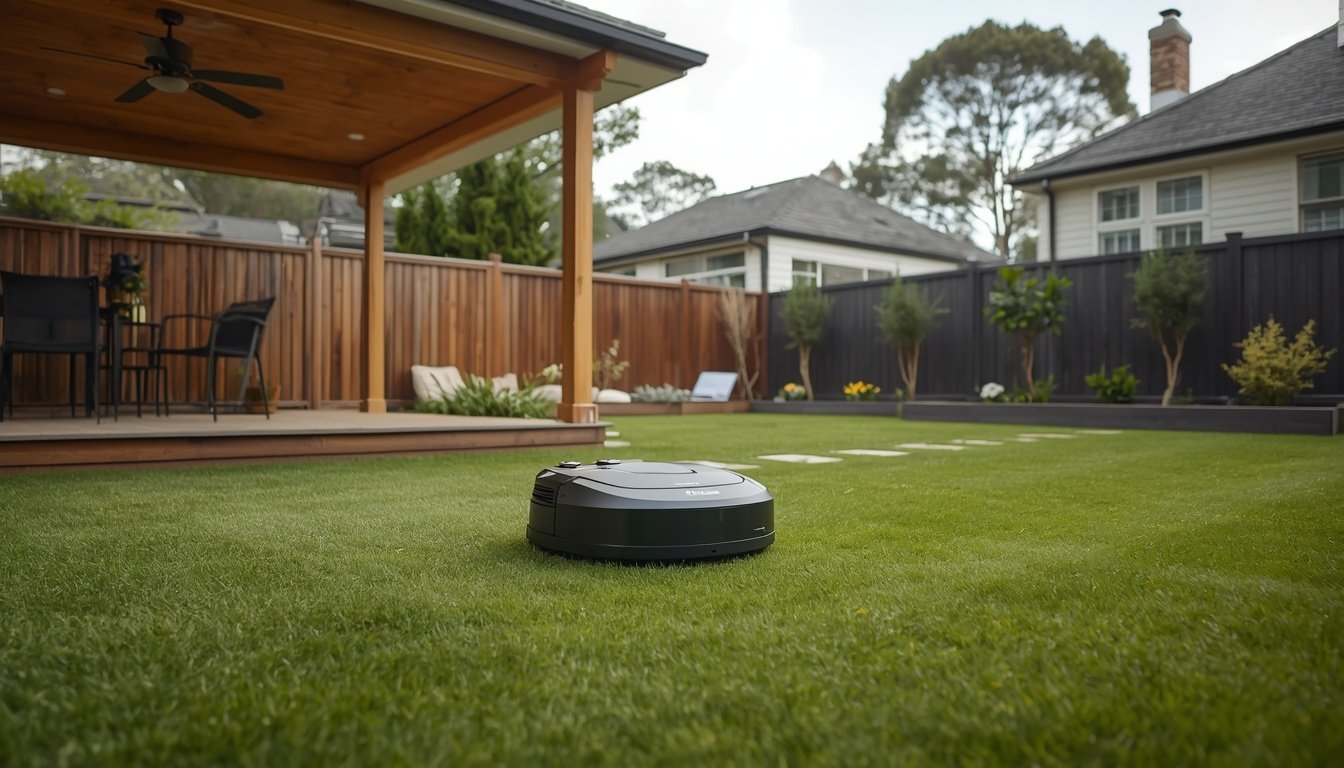
Wire-free robot mowers operate by using satellite navigation, camera-based vision, or sensors to map and maintain your lawn without needing a physical boundary wire. They determine the mowing area using GPS or visual markers, autonomously staying within set borders as they cut the grass. This eliminates the hassle of digging in perimeter wires and makes setup faster and more flexible, offering a simple solution for automatic lawn care.
How Wire-Free Mapping Works
Unlike traditional robot mowers requiring boundary wires, wire-free models rely on advanced location and detection technology. Many use a combination of GPS, RTK (Real-Time Kinematic positioning), or visual-based guidance systems. GPS and RTK allow the mower to pinpoint its location in your yard with high accuracy, often down to a few centimeters.
Some mowers include onboard cameras or sensors that visually “see” the landscape, identifying lawn edges, obstacles, and garden features. During setup, you typically guide the mower around the lawn using an app or the device itself, allowing it to learn and save the boundaries.
After this learning phase, the mower navigates on its own, referencing the digital map it created. If it strays near a prohibited area, it self-corrects its path using the virtual boundary. This mapping approach works on most lawn layouts and adapts if you make changes—such as moving a flower bed or adding a play structure—enabling a flexible lawn care experience.
Navigation, Obstacle Detection, and Safety
Wire-free robot mowers rely on smart navigation algorithms and built-in sensors to avoid obstacles and ensure safe mowing. Most models use ultrasonic or optical sensors to identify trees, toys, pets, and people within the mowing area. When an object is detected, the mower changes direction or stops to prevent collisions.
In addition to real-time obstacle avoidance, these mowers usually incorporate lift and tilt sensors. If someone tries to pick up or tip the mower, it instantly shuts off the blades, helping prevent accidents. Many models have safety features like PIN codes or alarms to deter unauthorized use.
The mower’s software also monitors for unexpected boundary breaches. If the unit’s GPS detects movement outside the mapped lawn, it will immediately pause and attempt to return to its assigned area. This combination of navigation intelligence, obstacle detection, and safety mechanisms keeps wire-free robot mowers both effective and secure during operation.
Main Benefits of Wire-Free Robot Mowers
- No installation of physical boundary wire required
- Flexible and easy setup—boundaries can be updated anytime
- Adapts to complex or changing garden layouts
- Quicker recovery if the mower is moved or needs to remap
These advantages mean you can quickly get your mower up and running without digging up your yard to lay a wire. If your landscaping changes, updating the mowing area is as simple as remapping it. This is especially useful for gardens with irregular shapes or temporary features. To learn more about these solutions, check out our wire-free robot lawn mower guide for detailed information.