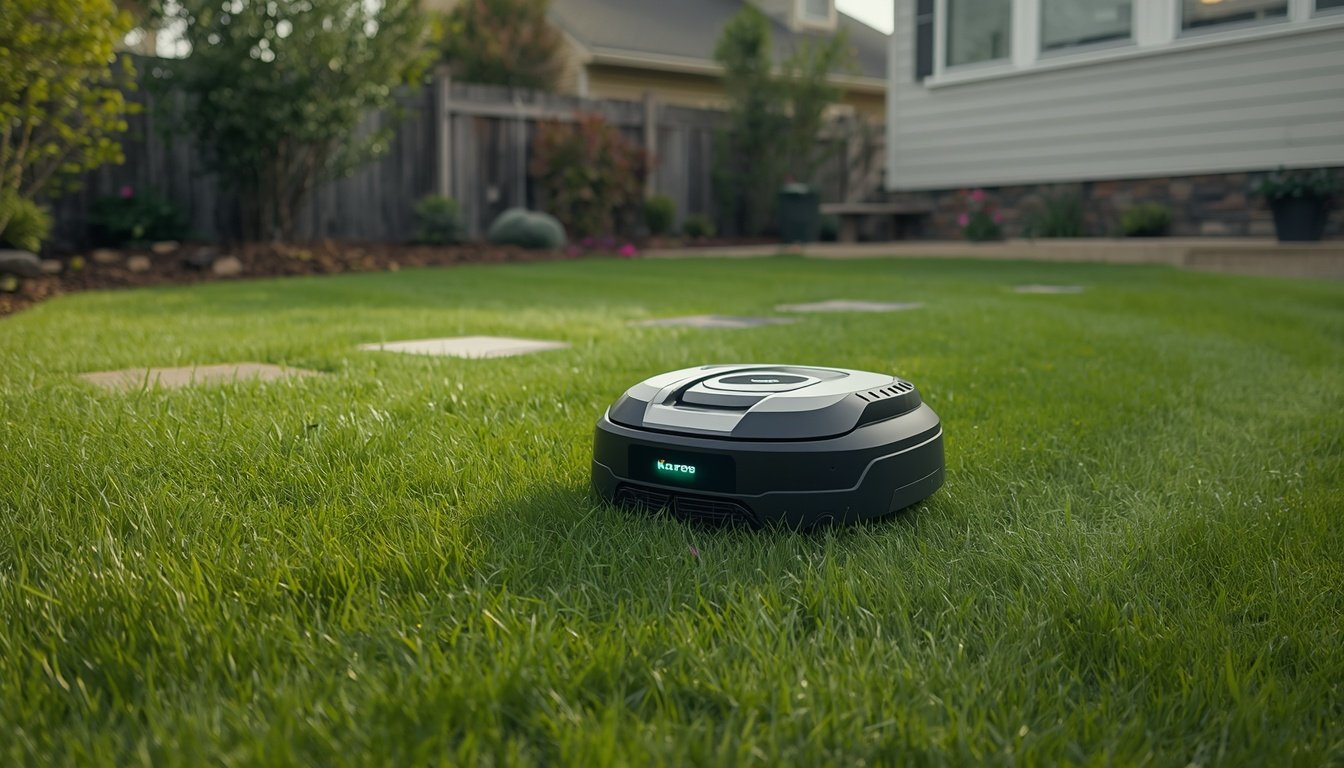
RTK and GPS robot lawn mowers use different navigation technologies to achieve lawn mapping and precise mowing. RTK (Real-Time Kinematic) systems provide much higher accuracy than standard GPS, resulting in extremely straight cutting lines and minimal missed patches. Many homeowners may wonder whether the improved accuracy of RTK really matters and how it influences day-to-day use. When considering wire-free robot mowers, understanding the technology behind RTK and GPS is crucial for making the right choice. For readers looking for technical breakdowns, the key differences in navigation accuracy and reliability are discussed here, and more can be learned in our guide to RTK and LiDAR robot mower navigation.
How RTK Navigation Works
RTK stands for Real-Time Kinematic, a satellite positioning technique that dramatically improves accuracy compared to standard GPS. RTK uses a fixed base station placed somewhere on the property to send continuous correction data to the mower’s onboard GPS receiver. This setup allows the mower to calculate its precise location—usually within 1–2 centimeters.
The base station receives raw satellite data just like the mower. It then compares the received satellite position with its own known, fixed location. Any discrepancies are broadcast as “corrections”—this is what makes RTK so accurate.
The mower receives both the satellite data and corrections, combining them in real time to adjust for positioning errors. This enables the mower to follow virtual boundaries and pre-set mowing paths with high precision.
RTK navigation is well-suited for large, open lawns and properties with few tall barriers, such as buildings or thick tree canopies. However, if the mower goes behind obstacles and loses “line-of-sight” to either its satellite connection or base station, its accuracy can be temporarily reduced until the signal is restored.
RTK is increasingly favored in premium robot mowers for its superior mapping, straight-line accuracy, and overall mowing efficiency. It also enables advanced features like multi-zone management and custom mowing paths, which benefit users who want to divide their property with high precision.
How GPS Navigation Differs
Standard GPS navigation, used in budget-friendly and some mid-tier robot mowers, relies solely on signals from global positioning satellites. Standard GPS can only pinpoint a mower’s location to around 1–2 meters at best. This leaves room for boundary drift, patchy mowing lines, and less precise area management compared to RTK systems.
Most GPS-only mowers handle mapping by driving the area and saving waypoints using its own calculated coordinates. This method is straightforward but can’t guarantee the mower will always follow the same line—especially if satellite signal strength fluctuates.
Because ordinary GPS lacks the correction data of RTK, any errors in satellite signal—like those caused by tall buildings, dense trees, or heavy cloud cover—can push the mower off its intended path. In some cases, safety margins are set to prevent the mower from leaving the yard, but this can result in a buffer zone of unmowed grass around boundaries.
GPS-based navigation works best on smaller or less complicated lawns where absolute accuracy is less critical. GPS mowers are usually priced lower, appealing to those who value wire-free convenience but don’t require extremely straight lawns or complex zone management.
On properties with open sky and minimal interference, GPS-guided mowers can work surprisingly well. However, their performance often varies from day to day based on environmental factors, making consistency their main challenge compared to RTK models.
Main Advantages of RTK Systems
- Ultra-high accuracy for straight mowing lines
- Stable performance across large, complex lawns
- Supports advanced features like no-go zones and multi-zone mowing
RTK navigation allows robot mowers to mow with remarkable precision, often making passes so straight it resembles a professional cut. The ultra-high accuracy not only improves the look of your lawn but ensures few, if any, areas are missed or repeatedly cut. RTK’s ability to maintain reliable positioning means it works just as well on large or awkwardly shaped lawns as it does on traditional rectangular ones. This stability allows for creative virtual boundaries, as well as highly customizable mowing areas and schedules, so you can easily exclude flowerbeds, play areas, or garden features with digital “no-go” zones. Another strength of RTK mowers is multi-zone management—meaning you can divide your property into distinct sections and control them independently within the app. This is especially helpful for estates, gardens, or lawns divided by paths or landscaping features. Overall, RTK mowers deliver the highest level of mowing and mapping performance currently available for homeowners who want the “set it and forget it” experience and enjoy a perfectly maintained lawn with minimal supervision.
Main Advantages of GPS Systems
- Lower cost compared to RTK-equipped mowers
- Simpler installation—no base station or complex setup
- Suitable for smaller, less intricate lawns
GPS-only robot mowers maintain strong appeal among those seeking affordability and simplicity. Without the need for a dedicated base station, installation becomes a straightforward process: simply mark the boundaries digitally or via a mapping walk, and the mower can get started right away. The cost advantage can be significant, making GPS robots accessible for many households. For users who don’t need ultra-precise striping or multi-zone complexity, the small trade-off in navigation accuracy is often outweighed by ease of use and price. GPS models are particularly useful for average-sized urban yards, simple shaped lawns, or areas with minimal obstacles that can cause signal dropouts. They provide the basic benefits of unmanned, wire-free mowing, which is often enough for many typical gardens. If your priority is a reasonably neat, effortlessly mowed lawn rather than perfectly straight lines or tightly managed zones, GPS navigation can provide all the utility you need at a fraction of the complexity and cost of RTK systems.
Limitations and Signal Challenges
Both RTK and GPS mowers must contend with potential signal loss, but the impact is more pronounced with RTK systems. RTK mowers can lose precise positioning if either the base station or satellite link is blocked by tall buildings, dense trees, or steep slopes. When this happens, the mower usually stops, waits for signal restoration, or reverts to less accurate GPS mode until corrections resume.
GPS-only mowers, while not as accurate, are slightly more forgiving about intermittent signal loss. They tend to keep working as long as they have enough satellites in view, but their lines may become more erratic during weak signal periods.
Urban environments are particularly challenging for both systems due to signal reflections from walls or “multipath errors.” Overgrown shrubs, metal objects, or temporary structures can also degrade performance and reduce accuracy. Users should consider their landscape features when choosing between systems.
Cold climates can add another wrinkle, as ice or heavy snow can obscure satellite signals or block low-mounted base stations. Professional installation or strategic placement of the base station—and being aware of how landscaping changes throughout the year—can make a significant difference in both reliability and mowing performance.
Choosing the right navigation method is all about balancing your expectations for line accuracy, installation complexity, and tolerance for minor missed spots or doubled mowing lines due to occasional signal hiccups.
Which Mower Should You Choose?
If you value lawn aesthetics and want tightly controlled mowing patterns, RTK solutions are hard to beat. RTK is best suited for large, open, or complex lawns where reliability and appearance go hand-in-hand. However, these systems come at a higher price point and may require more involved installation and maintenance—especially with the base station.
On the other hand, GPS mowers are practical, cost-effective, and perfect for users who want ease of use and are less concerned with exacting lines. If your yard doesn’t have many obstacles or complex boundaries, and you don’t need multiple zones, a GPS-powered mower is likely adequate and much simpler to set up.
Additionally, consider how often you host guests, the presence of pets or children, and how “hands off” you want your mowing experience to be. For families who prioritize convenience over perfect lines, a GPS robot is usually sufficient. For lawn enthusiasts or those maintaining commercial-level properties, RTK offers a clear advantage.
Ultimately, your property’s size, shape, and landscape features—along with your own expectations—should determine your choice. Being realistic about your priorities helps you select the right navigation system for years of hassle-free mowing.