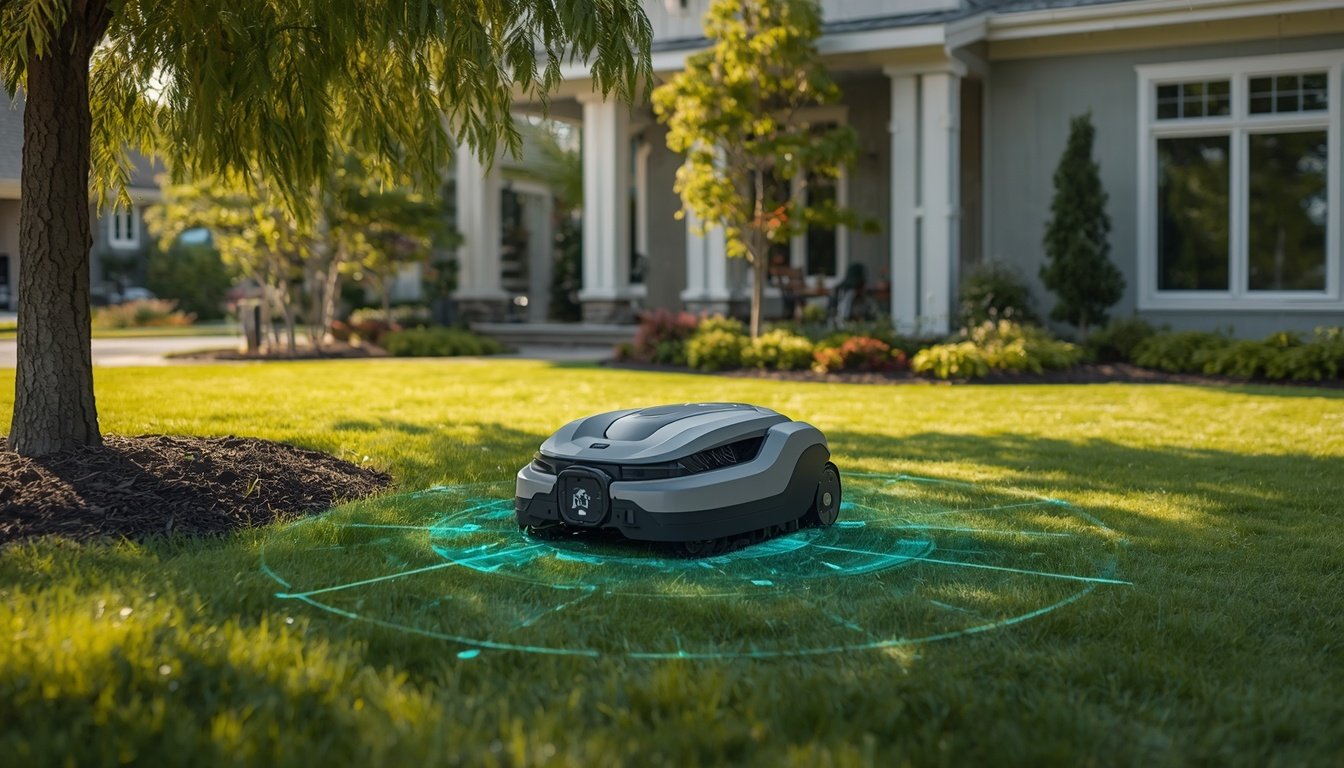
The Segway Navimow i215 LiDAR is the locked product choice for homeowners who specifically want a LiDAR robot lawn mower for wire-free lawn care. It is best suited to buyers who want a mower that can use LiDAR-based sensing to help navigate lawns with trees, obstacles, edges, and more complex yard layouts.
This page is for homeowners comparing LiDAR robot mowers because they want more than basic automatic mowing. The best choice still depends on your lawn size, tree cover, slopes, garden layout, obstacle risks, and whether LiDAR is the right navigation approach for your specific yard.
Quick Picks
- Best overall for LiDAR robot mowing: Segway Navimow i215 LiDAR
- Best for lawns with trees and garden features: Segway Navimow i215 LiDAR
- Best for buyers who want LiDAR-assisted obstacle awareness: Segway Navimow i215 LiDAR
Segway Navimow i215 LiDAR

A LiDAR-assisted wire-free robotic lawn mower option for homeowners who want smarter navigation around real lawn features. Check current price
The Segway Navimow i215 LiDAR is the best fit for this page because the buyer intent is specifically about LiDAR robot lawn mowers. LiDAR matters because it helps a mower sense the physical environment around it, rather than relying only on a basic boundary or a simple mowing pattern.
This makes the i215 LiDAR especially relevant for homeowners who have trees, garden beds, edges, paths, ornaments, or other lawn features that make the yard less straightforward. A simple open lawn may not need the same level of sensing, but a more detailed yard can make LiDAR more useful.
Best for: homeowners who want a wire-free robot mower with LiDAR-assisted navigation for lawns with trees, obstacles, and more detailed yard layouts.
Main advantage: the main advantage is LiDAR-assisted sensing. For buyers who are worried about how a robot mower understands the lawn around it, LiDAR is the reason this product belongs on this page.
Main limitation: LiDAR does not make a mower perfect. The mower still needs suitable lawn conditions, proper setup, clean sensors, realistic obstacle expectations, and a lawn size that matches the model’s rated capability.
What to Look For
- LiDAR relevance: choose a LiDAR mower because your lawn has physical features that make sensing and mapping useful.
- Tree and obstacle layout: LiDAR can be useful around trees, garden beds, edges, and lawn objects, but the mower still needs a sensible mowing environment.
- Coverage area: check the current product listing and compare the rated lawn size with your actual mowing area.
- Sensor maintenance: LiDAR and camera areas may need to stay clean so the mower can sense the yard properly.
- Navigation limits: LiDAR helps the mower understand nearby surroundings, but it does not automatically solve steep slopes, mud, long grass, or poor docking access.
- Obstacle expectations: do not assume every small toy, twig, garden light, or edge condition will be handled perfectly in every situation.
Final Recommendation
The Segway Navimow i215 LiDAR is the best overall choice here for homeowners who specifically want a LiDAR robot lawn mower. It is the strongest fit for this page because it matches the main buying intent: wire-free mowing with LiDAR-assisted navigation and sensing.
It is also the best option for buyers whose lawns include trees, garden features, and obstacles that make basic mowing more difficult. If your yard is more complex than a simple open rectangle, a LiDAR-focused mower may be more relevant than a basic entry-level model.
Avoid choosing this mower only because it has LiDAR if your lawn is too large, too steep, too rough, or better suited to a heavy-duty AWD mower. LiDAR is valuable for sensing and navigation, but lawn size, terrain, traction, and setup still matter.