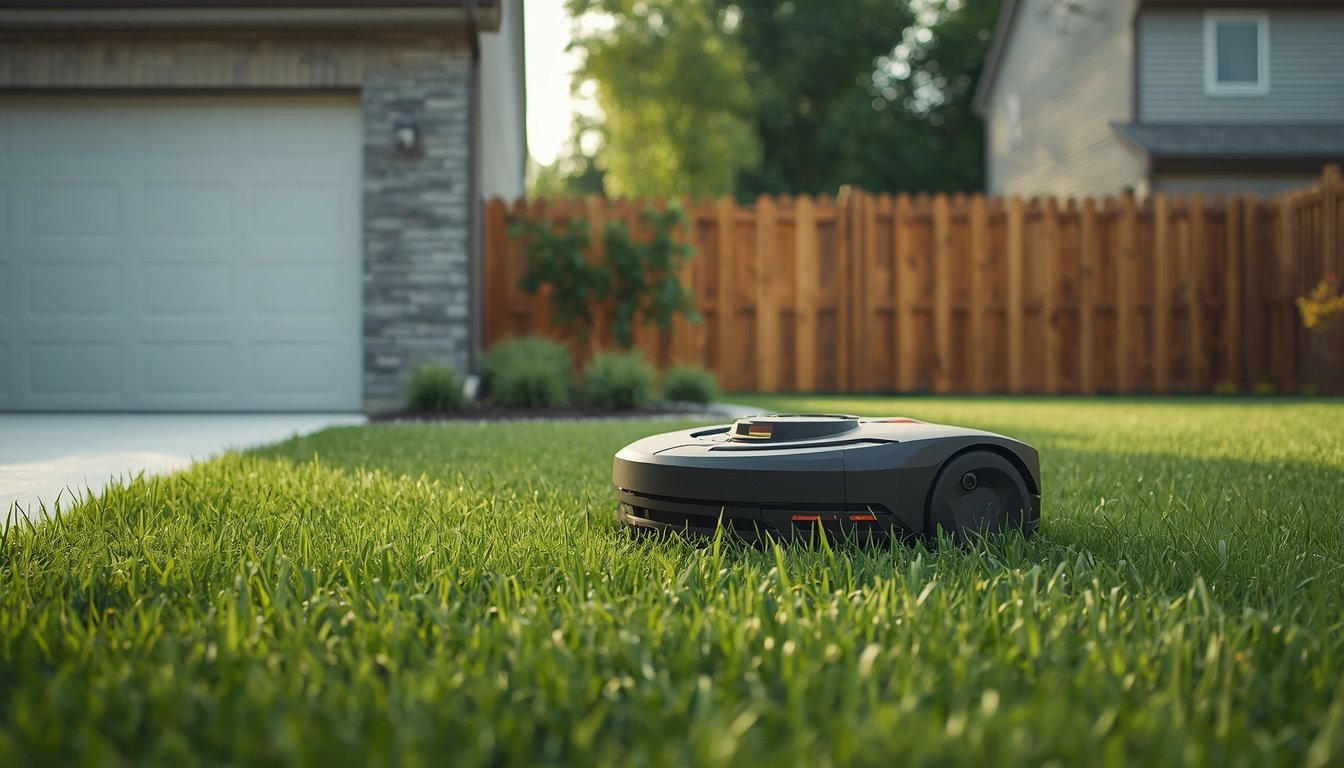
Yes, some robot lawn mowers can cross driveways if certain conditions are met. The ability depends mainly on the mower’s navigation method and the type of driveway. For mowers using virtual boundaries and smart navigation, crossing a flat, even surface like a driveway is usually possible. However, traditional models with boundary wires often cannot cross hard boundaries like asphalt or concrete since wires cannot be installed across these surfaces.
How Navigation and Boundary Systems Affect Crossover
Wire-free robot lawn mowers make it easier for a mower to handle zones separated by a driveway. These advanced mowers use GPS, sensors, or cameras to identify boundaries, so they don’t need a physical wire laid in the grass or pavement. If your driveway is flat and at the same level as your lawn, and there’s no curb or significant gap, a wire-free mower can often pass over it seamlessly.
However, older mowers relying on a boundary wire face limitations. The boundary wire cannot be laid across hard surfaces without causing installation and detection issues. This makes it practically impossible for a wire-guided mower to cross a driveway and continue mowing another section. Additionally, any raised curb or pronounced edge between lawn and driveway can block wheels or disrupt navigation, regardless of mower type.
It’s important to consider the surface texture as well. Uneven pavers or high transitions could cause the robot to get stuck or lose traction. Checking the manufacturer’s recommendations is essential before expecting your mower to safely cross a driveway.
Key Considerations for a Successful Crossover
- Type of driveway surface (concrete, asphalt, pavers, gravel)
- Elevation differences, curbs, or sharp edges
- Navigation technology (wire-free with GPS or boundary wire-based)
- Robot mower wheel size and clearance
- Driveway width and mower’s effective signal range
Each of these factors impacts a mower’s ability to cross successfully. Flat, flush driveways with no sharp transition are ideal. Mowers with larger wheels or higher clearance handle minor imperfections better. Advanced models featuring wire-free navigation, such as those described in our multi-zone wire-free robot mowers guide, are best suited for multi-zone lawns separated by driveways. Always ensure the mower’s virtual boundaries can be set to include both lawn sections and test the route for any mechanical challenges before scheduling unattended runs.
Practical Tips and Solutions for Divided Lawns
If you have a driveway between lawn areas, start by verifying both sections are level with the driveway and have minimal barriers. Wire-free systems let you program zones that include both sides, making them ideal for this situation. Always watch the mower during its initial runs to see how it navigates the crossing and adjust boundary settings as needed.
For driveways with uneven surfaces or curbs, consider installing ramps or smoothing transitions. This small modification can help the mower’s wheels cross without getting stuck. If using a wired system, you may need two separate installations—one on each side of the driveway—since most cannot run wire over asphalt or concrete effectively.
Lastly, keep driveways free of debris and parked vehicles during mowing sessions to prevent the mower from getting blocked or confused. Evaluating the layout and choosing the right mower type ensures consistent coverage, even across divided lawn zones. In most cases, modern wire-free robot mowers are the optimal choice for crossing driveways smoothly.