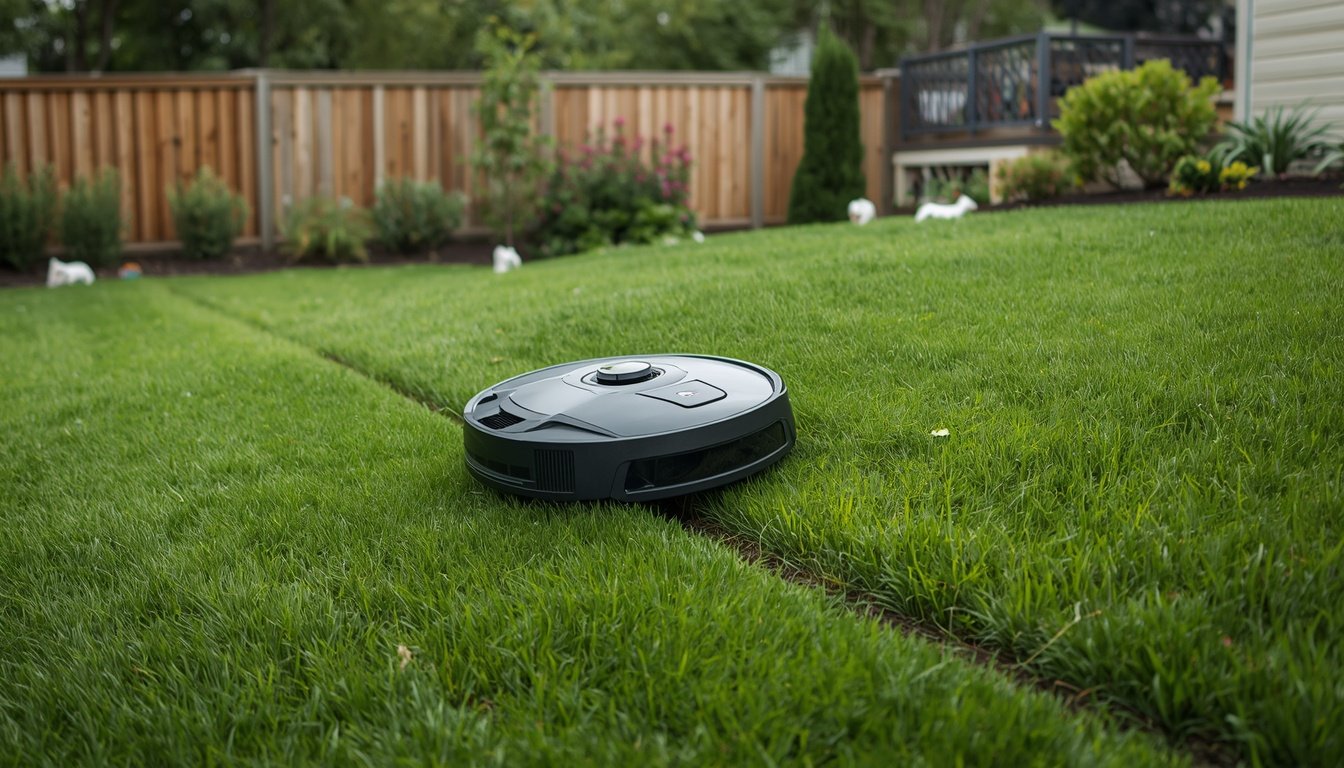
Wire-free robot mowers can handle multi-zone mowing by using advanced navigation and digital mapping instead of traditional perimeter wires. They allow users to define multiple mowing areas and schedules directly from a smartphone app, making them ideal for properties with more than one lawn section. If your yard has complex zones—such as front and back lawns separated by paths or driveways—these mowers can tackle each area efficiently when properly configured. For more examples of models suited to challenging layouts, see this guide to the best robot lawn mowers for complex lawns.
Understanding Multi-Zone Capability
Multi-zone mowing lets you manage several lawn sections with a single wire-free robot mower. By mapping each zone virtually, these mowers can move between distinct areas, following customized schedules and mowing patterns. Most wire-free systems rely on GPS, vision sensors, or a combination of both to recognize and remember the boundaries and layout of each distinct area.
This technology is especially beneficial if your property includes areas separated by physical barriers like fences, paths, or garden beds. Instead of manually moving the mower, you set up zones within the app. The mower recognizes when it is in a new area and adapts its mowing route to suit.
For properties with a straightforward, open layout, a single zone may suffice. However, for homes with separated lawns, intricate gardens, or uniquely shaped spaces, multi-zone features become essential. The main requirements are precise virtual boundary setup and unobstructed navigation paths between zones to ensure the mower can transition smoothly without intervention.
As wire-free robot mowers become more advanced, their ability to handle multiple zones accurately continues to improve. This makes them a flexible solution for a wide range of garden designs.
Setting Up Multiple Virtual Zones
Creating multiple mowing zones starts with mapping your lawn in the robot’s companion app. Most wire-free mowers let you “draw” or walk the boundaries of each zone during an initial setup process. Using their GPS and onboard sensors, the robot records each designated area and divides them into manageable segments.
Once mapped, each zone can be named and given specific mowing settings, such as cutting height, frequency, or time of day for operation. This is helpful if one zone is shaded and needs mowing less often while another is sunny and grows faster.
A key benefit of wire-free models is that you can edit or add zones at any time without digging up wires or moving physical markers. If your garden layout changes—say, you add a new flowerbed—the virtual zone boundaries can be easily updated within the app. It’s important, however, to ensure each zone’s borders are clear and that there is enough signal or visual reference for the mower to recognize these zones consistently.
Proper initial mapping is crucial, as errors can lead to inefficient mowing or the robot missing certain areas. Spend extra time walking and defining each zone accurately to maximize performance.
How Wire-Free Mowers Navigate Between Zones
Navigation between multiple zones is one of the most remarkable advancements in wire-free robot mowers. Once virtual zones are set, the mower uses its memory and navigation tech to move autonomously from one area to the next. Depending on the model, this can involve following a virtual corridor mapped during setup or using GPS to pinpoint its location relative to each saved zone.
Some models rely solely on GPS accuracy to guide the robot through your property. Others supplement this with onboard cameras or radar to identify transitions between hardscape (paths, driveways) and grass. These sensors help the mower avoid unexpected obstacles while moving between zones, minimizing the risk of getting lost or stuck.
If zones are separated by hard ground, many mowers can cross them—so long as the surface is fairly level and well-mapped. For lawns disconnected by obstacles like walls or steps, you’ll need to manually transfer the mower. Always check that your model supports automatic zone-switching before purchase, as this feature is not universal among wire-free machines.
This ability to traverse and remember multiple zones makes wire-free robot mowers especially suited to households where traditional mowers would struggle with complex layouts.
Advantages of Multi-Zone Wire-Free Mowing
- Custom schedules for each lawn area
- No need to relocate physical boundary wires
- Easy adjustments as your garden evolves
With multi-zone capabilities, it’s simple to program different mowing routines for each part of your property. This can save you significant time and effort, especially if certain lawns grow at different rates. Not having to move or bury wires eliminates disruptive installation work and allows much more flexibility in how you arrange or alter your landscape.
Because boundaries are virtual, if you modify your garden or add features, updating zone settings takes only a minute or two in the app. This adaptability ensures your robot mower stays useful year after year, even as your yard changes. If you’re the type who likes to experiment with new layouts or plantings, wire-free multi-zone mowers provide unmatched convenience for modern yard care.
Tips for Optimal Multi-Zone Performance
- Ensure clear, unobstructed paths between zones
- Double-check zone boundaries for accuracy
- Schedule mowing times to avoid overlap
To get the best results from a multi-zone setup, the mower must have a smooth passage between each zone. Remove items like hoses, planters, or toys that might block its route. Before your robot begins its routine, walk the planned mowing path to spot any navigation challenges or obstacles.
Accurate boundary setup is crucial. Zones that are too close together can confuse the mower or cause it to overlap areas unnecessarily. Revisit your app’s mapping feature periodically to refine these boundaries. Finally, set unique mowing times for each zone to prevent accidental overlapping or overuse, which can lead to patchy grass. Well-planned scheduling keeps the mower working efficiently and ensures a healthy, evenly cut lawn throughout your property.