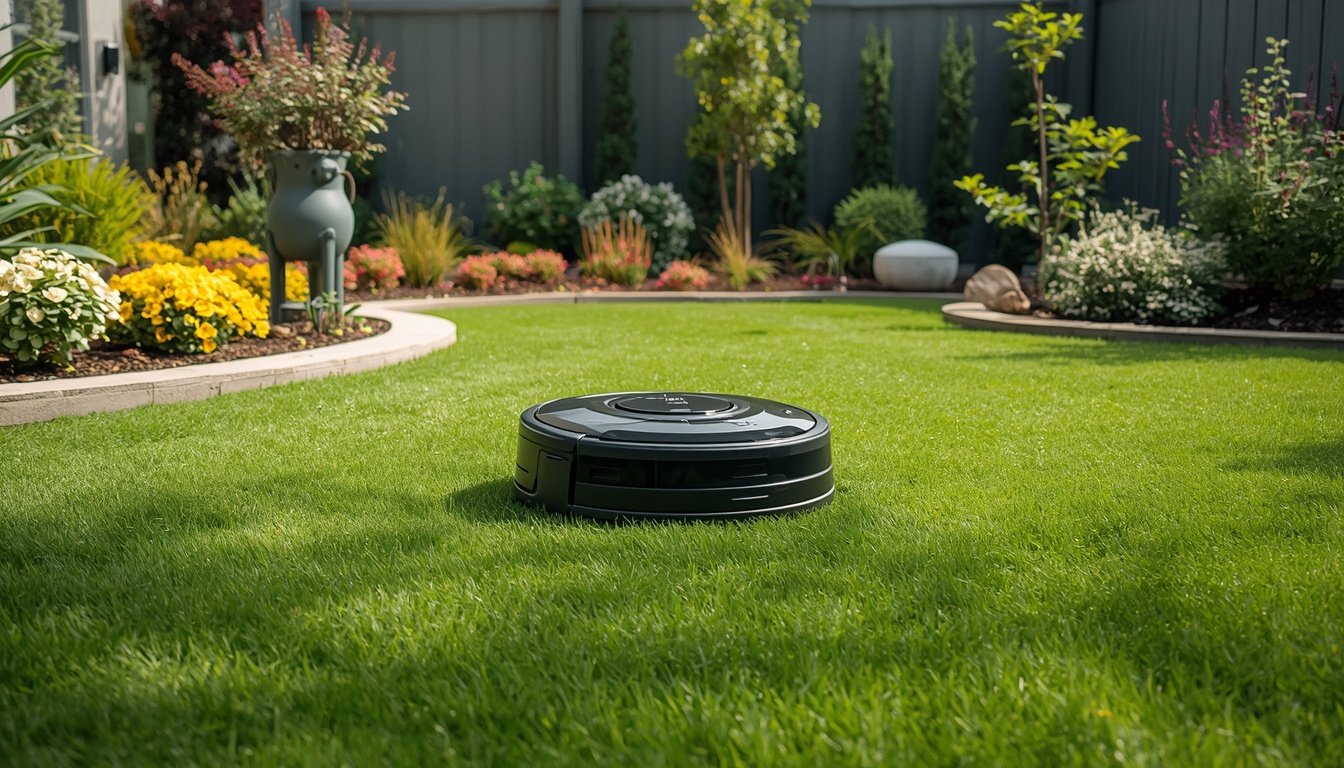
Most robot lawn mowers don’t consistently cut in straight lines across the lawn. Instead, they usually follow a random pattern unless you purchase an advanced model with GPS or systematic navigation. So, if you want those classic football pitch stripes, a typical wire-free robot mower is unlikely to deliver them automatically.
How Wire-Free Robot Mowers Navigate Your Lawn
Wire-free robot lawn mowers operate with built-in sensors, cameras, or GPS systems to define boundaries and guide their movement. Standard wire-free models use a random navigation approach, bouncing from edge to edge. This pattern ensures even coverage but lacks the straight, organized rows seen with traditional mowing. Advanced wire-free mowers, however, may feature “systematic navigation.” These higher-end devices use mapping technology and memory to mow in straight parallel lines, provided the lawn shape allows.
The mowing result depends on the model you choose and your yard’s complexity. Obstacles, curves, and irregular borders can disrupt any straight-line pattern, even with smarter mapping. For more details on creating a precise mowing area, see how to install a wire-free robot mower. Overall, unless you invest in a premium model, expect a functional but random-looking cut pattern instead of uniform stripes.
Factors That Affect Mowing Patterns
Several key factors impact the mowing pattern made by a wire-free robot mower. Lawn shape is one major factor—open, rectangular lawns are easier for straight-line models to handle, while odd-shaped or cluttered yards make systematic mowing less likely. Tall grass or thick patches might deflect the robot’s path as well, creating small deviations from straight lines.
Another factor is the mower’s navigation technology itself. Basic random-pattern models intentionally avoid repeating the same path to ensure all grass is mowed over time. More expensive mowers with advanced sensors and mapping software can remember previous routes, allowing them to move in straighter lines when conditions allow. However, even these models might revert to random patterns in areas that confuse their sensors.
The last important factor is setup. An accurate boundary map and careful installation influence whether the mower can follow a straight course. Obstructions or mistakes in virtual boundary mapping can lead to missed spots or uneven passes, especially if you have flower beds, trees, or oddly shaped zones in your yard.
When to Expect Straight Lines—And When Not To
- Basic wire-free models usually cut in random directions, not straight lines.
- Premium wire-free mowers with GPS can be programmed for straight mowing paths.
- Obstacles and curves in your yard may disrupt even the best straight-line logic.
- Proper setup and mapping improve your mower’s ability to cut evenly.
- Not all models support custom stripe patterns or mowing angles.
If your goal is a striped, manicured look, only high-end wire-free mowers with smart navigation will come close. Even then, result quality depends on your lawn’s layout and whether you’ve set clear, unobstructed mowing zones. Regular maintenance like trimming the lawn edges and clearing obstacles also helps preserve whatever pattern your mower achieves. Most homeowners find that wire-free mowers focus on convenience more than aesthetics, but with the right machine and setup, straighter lines are possible.