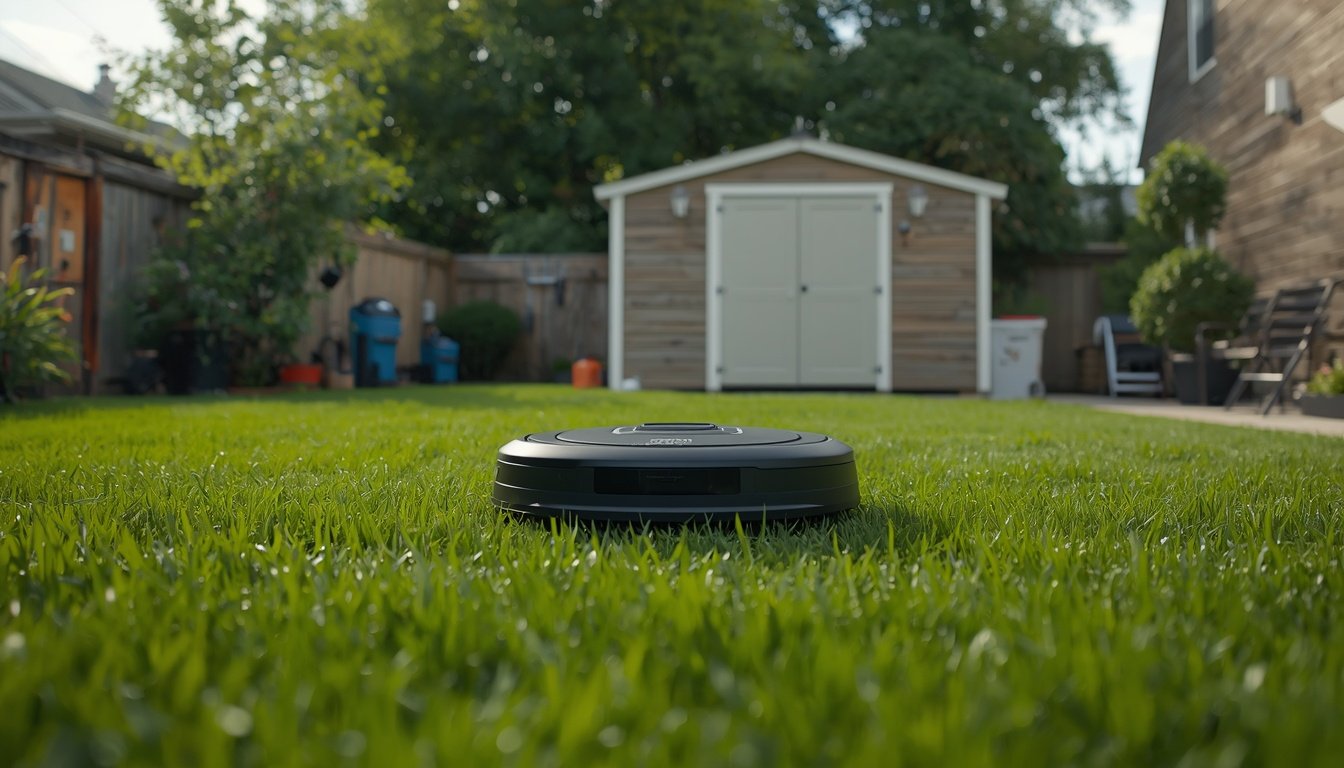
No-go zones on robot lawn mowers are user-defined areas where the mower is not allowed to operate. These zones prevent the mower from entering specific parts of the lawn, such as flower beds, garden features, or newly seeded sections. No-go zones can be set digitally or physically, depending on the mower’s boundary system.
How It Works
Wire-free robot mowers use digital mapping and sensors to define no-go zones instead of relying on perimeter wires. During the initial setup, users identify areas to avoid using a mobile app or mower control interface. The mower’s onboard GPS and sensors then recognize these digital boundaries while operating.
When the mower approaches a no-go zone, it detects the set virtual border and automatically adjusts its path to avoid crossing into the restricted area. This process operates in real-time, allowing the mower to adapt if there are changes in its environment or mapping settings.
What It Can Do
No-go zones offer a practical way to protect parts of your yard from accidental mowing. With wire-free technology, these zones can be customized quickly and adjusted whenever lawn layouts change. Below are some tasks no-go zones enable:
- Prevent the mower from entering flower beds or areas with delicate plants.
- Protect features like trampolines, pools, or garden furniture without extra physical barriers.
- Temporarily block off recent seeding or chemical treatment zones.
- Adapt quickly to new landscaping by updating digital no-go boundaries.
- Support complex lawn layouts with multiple restricted zones as needed.
Using no-go zones greatly increases the flexibility and precision of lawn maintenance. Instead of moving physical boundary wires, users can make changes through an app or interface, reducing lawn disruption. This approach simplifies lawn care management and makes it easier to protect sensitive areas from accidental mowing.
Limitations and What It Cannot Do
While no-go zones provide convenience, they are not without limitations. These tools rely on the accuracy of the robot mower’s positioning system and the correct setup by the user. Their effectiveness may vary depending on the strength and reliability of GPS or onboard navigation technology.
- No-go zones may not be accurate if the GPS signal is weak or obstructed (for example, near tall buildings or dense trees).
- Physical changes to the lawn, such as adding new obstacles, require users to update the digital map manually.
- Some wire-free systems may have a minimum size for no-go zones, limiting precision around small areas.
- Weather or technical malfunctions could temporarily affect the robot mower’s ability to respect no-go zones.
- If the lawn is complex with frequent layout changes, manual monitoring may still be required to ensure effectiveness.
It is important to note that digital no-go zones are not foolproof. External factors like GPS drift, software bugs, or accidental deletion of mapped zones can impact performance. Users should periodically inspect both the physical lawn and the mower’s settings to confirm that all restricted zones remain correctly marked and that the mower is operating as intended.
When It Works Best
No-go zones work most effectively on open lawns with clear satellite visibility and stable environments. They excel in gardens where boundaries change due to landscaping updates, or where physical wires are impractical. In particular, homeowners with complex yards benefit from being able to adjust restricted areas using digital tools.
If the environment rarely changes or if the lawn contains many permanent obstacles, a wire-free mower with robust no-go zone capabilities offers ongoing convenience. This is especially useful for lawns with sensitive sections, such as new plantings or frequently relocated outdoor furniture.
Some of the best robot lawn mowers for complex lawns are optimized for managing multiple digital no-go zones in such scenarios.
Common Misconceptions
One misconception is that no-go zones can prevent all accidental entries, but they depend on accurate mapping and unblocked positioning signals. Another is that all robot mowers support digital no-go zones; only wire-free or advanced models offer this feature. It is also incorrect to assume no-go zones can work perfectly in every environment without periodic adjustments.
Final Answer Summary
No-go zones on robot lawn mowers use digital mapping to keep the mower out of specific areas, relying on GPS and sensor accuracy. Their success depends on proper setup and regular maintenance, with some limitations in challenging environments. For most users, they offer a flexible way to manage lawn care around sensitive or high-traffic zones.