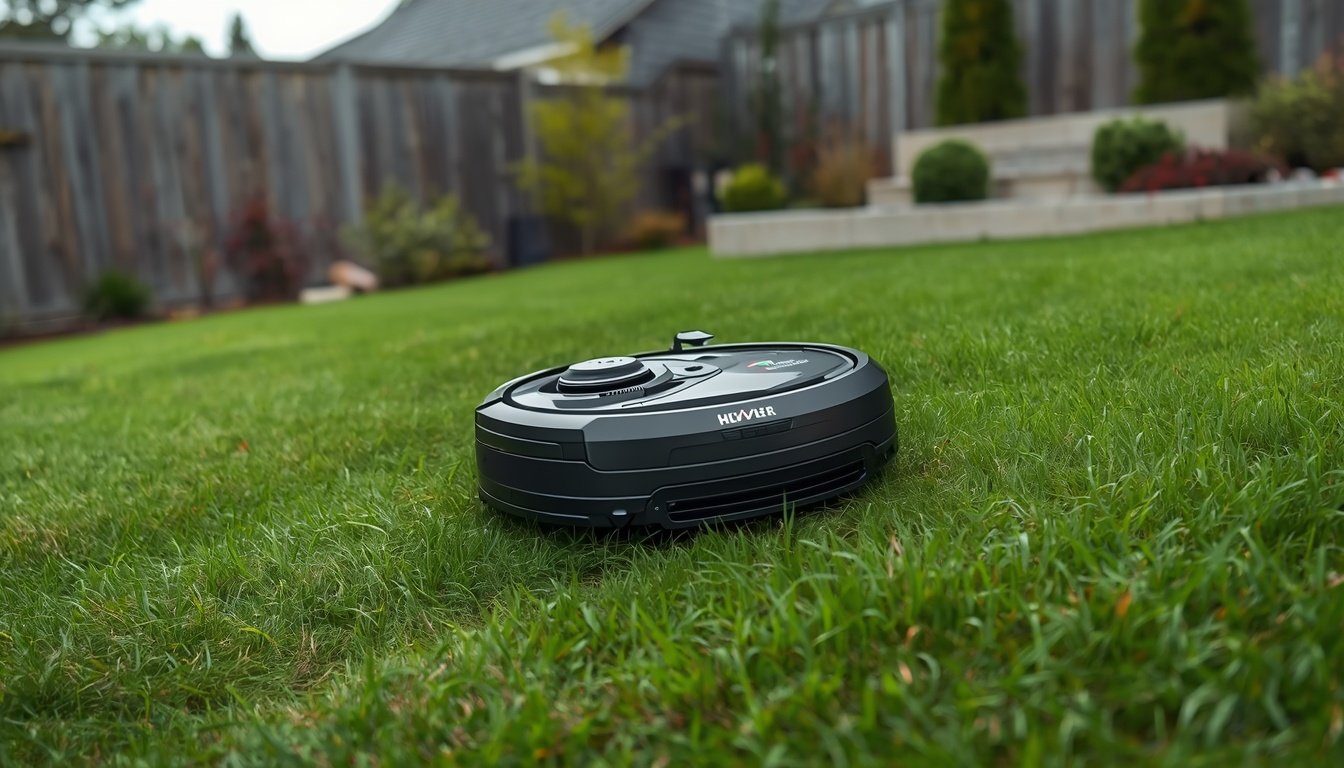
Wire-free robot lawn mowers can handle fenced or gated lawns—if certain conditions are met. These mowers don’t rely on physical boundary wires; instead, they use GPS, sensors, or camera-based navigation. This means that as long as the access points and boundaries are clearly defined, wire-free mowers can navigate inside fenced-in lawn spaces. If you have multiple zones or gates, exploring multi-zone wire-free robot mowers could improve performance across separated areas.
How Wire-Free Mowers Navigate Fenced and Gated Lawns
Wire-free robot mowers create and remember virtual boundaries using satellite mapping, camera images, or smart sensors. These boundaries guide them to mow only the intended areas. With a fenced or gated lawn, the entire space must be “learned” by the mower during setup. Owners usually guide the mower around the perimeter using a smartphone app or remote control. The virtual map is then stored for future mowing sessions.
If there are locked gates or access points, the mower sees these as fixed physical barriers. Most wire-free systems work well inside single, fully enclosed areas, as long as the entire mowing zone is accessible. However, the mower cannot open gates or pass through fences. If your lawn includes multiple gated areas, you’ll need to move the mower manually between zones or invest in advanced multi-zone models.
This ability to handle enclosed spaces makes wire-free robot mowers ideal for many suburban gardens, but the setup process must be precise. Any changes to the landscape, fencing, or gate placement may require re-mapping to avoid navigation errors.
Setting Up Virtual Boundaries in Confined Lawns
The setup process for wire-free mowers in fenced or gated lawns is slightly different from using them in open areas. The key difference is the reliance on accurate virtual boundaries that conform to your fence lines and gates. During setup, you’ll need to closely guide the mower to outline the perimeter, ensuring it learns the physical barriers.
Some models allow you to add “no-go” zones inside the mapped area. This feature is useful for avoiding vegetable patches, flower beds, or sections blocked by a locked gate. After creating the boundary, owners can test and tweak the virtual map to guarantee the mower doesn’t bump against the fence or miss out sections along the edges.
Wireless boundaries also mean any future changes—like moving a gate or removing a segment of fence—require a quick adjustment of the digital map. One advantage: there’s no risk of accidentally cutting boundary wires during lawn maintenance. The process is much simpler and less invasive than the traditional wired approach, which often involved digging and burying cables. Overall, precise setup is essential for smooth operation within fenced or gated lawns.
Key Benefits of Wireless Tech in Enclosed Lawns
- No physical wire installation required
- Easy to update virtual boundaries
- Works with complex fence layouts
Wire-free robot mowers eliminate the hassle of laying physical boundary wires along every stretch of fencing and around each gate. This saves hours during installation and prevents the risk of corruption or damage to buried cables over time. If you shift a fence or add a new gate, you can simply re-map the affected zone digitally—no digging or cabling work needed.
Virtual boundary systems are flexible enough to match even intricate fence layouts, odd shapes, or winding garden paths. That means they can adapt to properties where traditional boundary wire installation would be difficult or unsightly. For homeowners who frequently modify their landscape, the ability to update virtual zones quickly is a major advantage. These benefits make wire-free systems particularly attractive for anyone with a changing or uniquely enclosed lawn space.
Common Limitations and Potential Issues
Despite their advanced navigation systems, wire-free mowers face some limitations in fenced or gated lawns. First, their sensors or GPS units might be less accurate in areas with tall metal fences or nearby buildings that can disrupt signals. This can lead to occasional “missed spots” along the boundary or unexpected stops at certain corners. If a gate remains locked or blocked, the mower cannot transition between areas without assistance.
Another concern is that virtual boundaries require recalibration whenever you adjust gates or fences. This process is relatively easy, but failure to update the map could confuse the mower. Small gaps under fences can also cause problems with some models if the mower attempts to escape, so making sure the perimeter is secure is crucial.
Lastly, wire-free mowers may struggle if the enclosed lawn is split into entirely separate zones that cannot be connected through open gates or paths. In these cases, the machine must be manually moved between areas, which can be inconvenient for users seeking total automation. Identifying these limitations up front helps ensure realistic expectations and smoother operation.
Best Practices For Fenced or Gated Lawns
- Secure all gaps under and around fences
- Test navigation near gates and corners
- Update virtual maps after any changes
Even with smart navigation, a wire-free mower’s performance depends largely on lawn preparation. Ensuring all fencing is close to the ground, without large gaps, will prevent the mower from escaping or getting stuck. Testing the lawn boundaries during setup—especially near tricky corner sections or around gates—enables you to spot potential issues that could hinder the mower’s route.
If you adjust your fence, add a new garden bed, or change a gate location, promptly update the virtual map in the mower’s app. Neglecting this step could lead to navigation errors or incomplete mowing cycles. Following these best practices keeps both your mower and your fenced garden protected while delivering a reliably manicured lawn.
Future Outlook: Evolving Features and Smarter Lawns
Wire-free mower technology continues to advance, which bodes well for homeowners with fenced or gated lawns. GPS accuracy and AI navigation are improving each year, reducing the likelihood of missed edges or interference-related issues. Some high-end models now feature precision docking, proactive obstacle detection, and mapping algorithms that quickly adapt to minor landscaping changes.
Integration with smart home devices and security systems is also on the horizon. Soon, mowers may be able to communicate with automated gate openers, enabling entirely automated coverage for separated lawn areas. These advancements promise to eliminate some of the common limitations of today’s wire-free mowers, allowing for even easier setup and greater autonomy in complex garden layouts.
As robotic lawn care evolves, property owners can expect increasing flexibility and convenience—especially as more lawns feature multiple secure zones or changing perimeters. For now, making the most of existing wire-free technology involves careful setup and regular updates, but the future points toward a truly maintenance-free mowing experience.