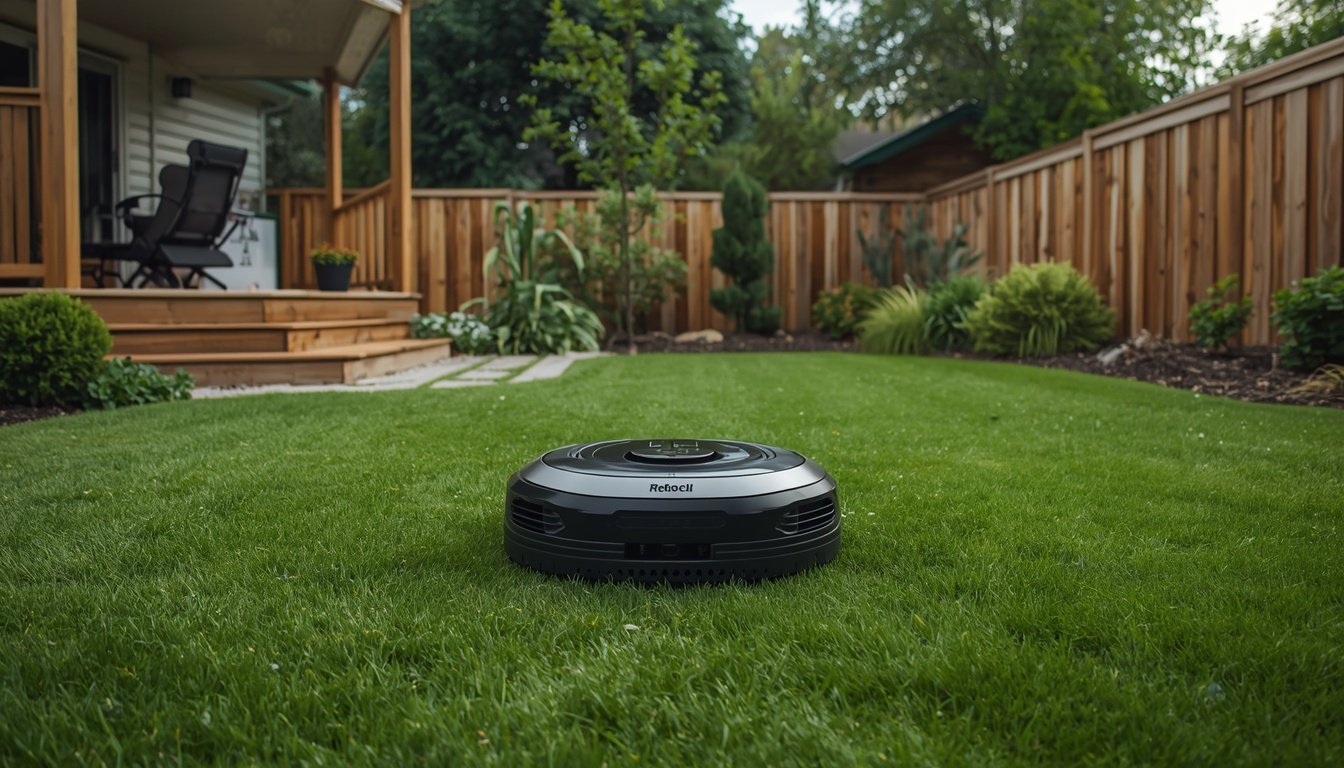
If you have an RTK (Real-Time Kinematic) robot mower, you typically do need a base station for precise navigation. The base station transmits correction signals, allowing the mower to achieve the high accuracy that RTK systems are known for. Without this base station, your mower will rely only on standard GNSS signals, which greatly reduces position accuracy and can cause erratic mowing patterns or missed areas.
How RTK Base Stations Improve Mower Accuracy
RTK base stations deliver real-time correction data to your mower, significantly enhancing location accuracy. Standard GPS alone can have errors up to several feet, making precise mowing difficult—especially near edges or in gardens with complex borders. The base station broadcasts local corrections, which the mower receives and uses to continually refine its position, usually achieving centimeter-level precision.
This precise navigation is essential if you want tidy mowing lines, accurate perimeter management, and safe obstacle avoidance. Inconsistent accuracy can leave patches unmowed or cause the mower to travel outside your designated area. Most RTK mowers come with a base station because it’s vital for reliable, wire-free navigation, especially on mid-sized and large properties.
If you live in an area with many tall buildings, trees, or other obstructions, the base station helps mitigate signal disruption. With a proper setup, your mower can handle more complex or variable terrain, delivering a consistently manicured lawn even in challenging environments.
Are There Any RTK Mowers Without a Base Station?
Some newer RTK robot mowers use third-party correction services, often delivered via cellular signal, eliminating the need for a physical base station. However, these services may require a subscription, and their reliability can depend on local cellular coverage and network availability. In most cases, mowers marketed as “wire-free” still ship with a base station for home use since this remains the most consistent method for achieving maximum accuracy.
If your property is in a rural area or a location with poor cell reception, relying solely on cloud-based RTK corrections can be risky. Weather, connectivity, and service outages might impact performance. Meanwhile, a local base station provides a stable correction source independent of external networks, maximizing uptime.
When choosing an RTK mower, you’ll want to review whether it requires a base station or can operate with cloud corrections. For most users—especially those wanting RTK and LiDAR robot mower navigation for optimal results—the included base station is the most straightforward solution.
Key Points to Consider When Deciding on a Base Station
- RTK base stations are essential for most wire-free mowers to achieve maximum navigation accuracy.
- Some mowers can use third-party RTK correction services but may depend on a stable internet connection and may incur extra fees.
- Your local environment—such as trees, buildings, and cell coverage—can affect whether a base station or a cloud correction solution works best.
- For large or complex lawns, a dedicated base station ensures reliable, uninterrupted coverage.
Choosing between a physical base station and a subscription-based RTK service often comes down to your property layout and connectivity options. A local base station gives you control and reduces reliance on external signals, which is especially valuable on properties with many obstacles or spotty cell service. On the other hand, subscription services might be suitable for smaller, more open lawns with strong connectivity. Evaluate your needs, budget, and landscape complexity to decide which solution gives your mower the most reliable navigation.