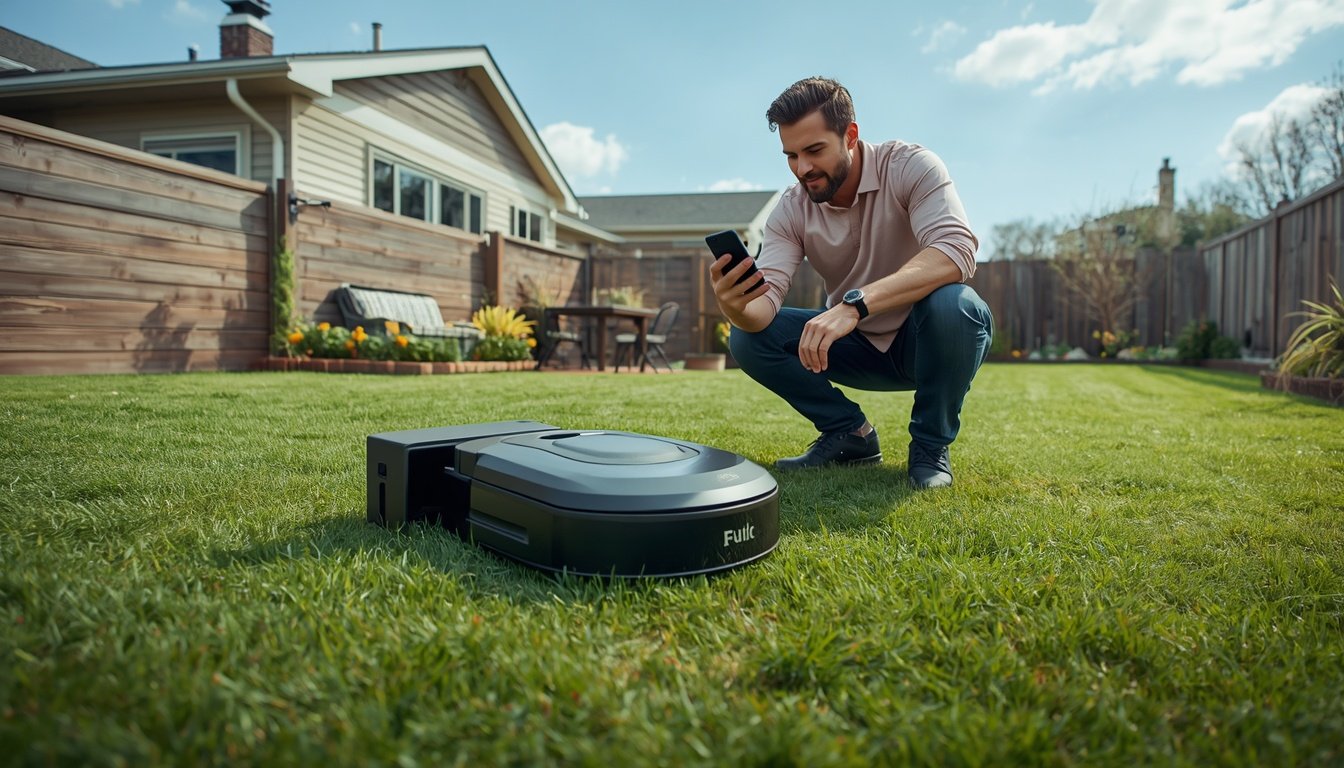
A wire-free robot mower is usually a good-value purchase when it replaces regular manual mowing, a paid lawn service, or a time-consuming ride-on mower routine. It is less compelling for very small lawns, difficult yards with poor conditions, or homeowners who still expect completely hands-off lawn care with no trimming, setup, or maintenance.
The real question is not just the purchase price. The value depends on your lawn size, how often you mow, how much your time is worth, whether your yard suits robotic mowing, and whether the mower can reduce enough ongoing work to justify the upfront cost.
What This Guide Covers
This guide explains how to judge the cost and value of a wire-free robot mower before buying one. It covers upfront price, long-term savings, hidden costs, time savings, convenience, suitable use cases, and the situations where a robot mower may not make financial sense.
Wire-free models usually cost more than basic manual mowing equipment and often more than older boundary-wire robot mowers. However, they can reduce the hassle of installing perimeter wire and may offer better setup flexibility through virtual boundaries, RTK positioning, LiDAR, camera systems, and app mapping.
If you are still comparing the general price range, start with Robot Lawn Mower Cost: What to Expect. That guide gives a broader look at price tiers. This article focuses more on whether the money spent can be justified by practical benefits over time.
How Robot Mower Value Works
The value of a robot mower comes from repeated lawn maintenance. Unlike a traditional mower, which you use manually each time, a robot mower is designed to cut small amounts of grass frequently. Over time, that can reduce the number of hours you spend mowing, scheduling lawn care, or managing weekend yard work.
The most obvious value is time saved. If you spend one or two hours mowing every week during the growing season, that time adds up quickly. A robot mower does not remove every lawn job, but it can take over the repetitive part of keeping the grass short. For a deeper look at that side of the decision, see How Much Time Does a Robot Lawn Mower Save?.
The second value is convenience. A wire-free system avoids the buried perimeter cable that older robotic mowers often need. That can make setup cleaner, easier to adjust, and better suited to homeowners who do not want to trench around the lawn or repair broken boundary wires later.
The third value is consistency. A well-set-up robot mower can keep the lawn looking regularly maintained rather than letting it grow long between manual cuts. This is especially useful for homeowners who are busy, travel often, dislike mowing, or struggle to keep up during fast-growing seasons.
Common Use Cases
The strongest use case is a medium to large lawn that currently takes regular time to mow. If the mower can reliably cover the main grass area, return to its charging station, and maintain the lawn with limited supervision, the convenience benefit can be significant.
Another strong use case is replacing or reducing paid lawn service visits. If you pay someone to mow every week or every two weeks, a robot mower may eventually offset some of that cost. The exact payback depends on local mowing prices, lawn size, mower price, and how much manual edging or cleanup still remains. To compare that scenario, read Robot Lawn Mower vs Lawn Service Cost.
Wire-free models are also useful for homeowners who want robotic mowing but do not want to install boundary wire. This is common with newer yards, rental-style situations, changing garden layouts, or homeowners who simply do not want a permanent cable around the lawn.
Large properties can also benefit, but only if the mower is correctly sized. A small mower on a large lawn may run too often, miss areas, or struggle to keep up. If you have a larger yard, the buying decision should focus on coverage, battery capacity, navigation, and whether the mower is designed for that amount of work.
Key Factors to Consider
- Upfront price: higher-end wire-free models can cost significantly more than manual mowers or entry-level robot mowers.
- Lawn size: larger lawns create more potential time savings, but they also require more capable and expensive models.
- Manual work remaining: edging, trimming, clearing debris, and occasional troubleshooting may still be needed.
- Setup difficulty: poor charging station placement, weak RTK signal, or inaccurate mapping can reduce value.
- Long-term ownership costs: blades, batteries, accessories, protective covers, repairs, and subscriptions may add to the total cost.
- Alternative costs: compare the mower against a lawn service, ride-on mower, push mower, or older wire-guided robot mower.
The best value usually comes when the mower solves a real recurring problem. If you dislike mowing, have limited time, or already pay for regular lawn care, the financial and lifestyle case is stronger. If you have a tiny lawn that takes ten minutes to cut, the practical return may be much weaker.
Choosing the Right Option
Start by estimating your current mowing cost. If you mow yourself, calculate the time spent each week and how many weeks per year you mow. If you pay for lawn service, estimate the yearly total. If you use a ride-on mower, include fuel, maintenance, storage, and your time.
Next, compare that figure with the robot mower’s purchase price and expected ownership costs. Replacement blades are normal. Some accessories may be useful. Battery replacement may matter later. Protective storage or a mower garage may also be worth considering. These smaller expenses are easy to overlook, so read Hidden Costs of Wire-Free Robot Mowers before deciding.
Then match the mower to your lawn. A budget model can be excellent on a small, open, simple yard. A large, sloped, tree-heavy, or multi-zone property may need a more expensive mower with better navigation, traction, and coverage capacity. Buying too small can be a false economy if the mower cannot maintain the lawn properly.
If you are comparing wire-free models against older boundary-wire systems, use Wire-Free vs Wire-Guided Robot Mower Cost. A wire-guided mower may cost less upfront in some cases, but installation effort, wire repairs, and flexibility should also be considered.
For buyers ready to compare products, Best Wire-Free Robot Lawn Mowers is the broad starting point. If avoiding perimeter wire is your main priority, use Best Robot Lawn Mower Without Perimeter Wire.
Limitations and Considerations
A robot mower is not a full landscaping service. It will not redesign the lawn, remove heavy branches, fix drainage problems, trim every edge perfectly, or handle every obstacle without help. It is mainly a maintenance tool for keeping grass at a controlled height.
Some homeowners are disappointed because they expect complete automation. A more realistic expectation is that the mower handles the main mowing work while you still manage edges, fallen debris, seasonal cleanup, setup adjustments, and occasional troubleshooting.
Performance also depends heavily on lawn suitability. Wet grass, mud, steep slopes, exposed roots, narrow passages, poor docking routes, weak signal areas, and heavy tree cover can all affect the result. In some yards, a more expensive model may be necessary. In other yards, even a premium mower may still need supervision.
There is also the risk of overbuying. A premium mower designed for large or complex lawns may be unnecessary for a small flat yard. In that case, the extra cost may not provide much practical benefit. A good value choice is the mower that fits the lawn, not automatically the most expensive model.
The payback period also varies. A homeowner replacing frequent paid mowing may see the value faster than someone who already owns a mower and does not mind using it. To think through that calculation more clearly, use How Long Does It Take for a Robot Mower to Pay for Itself?.