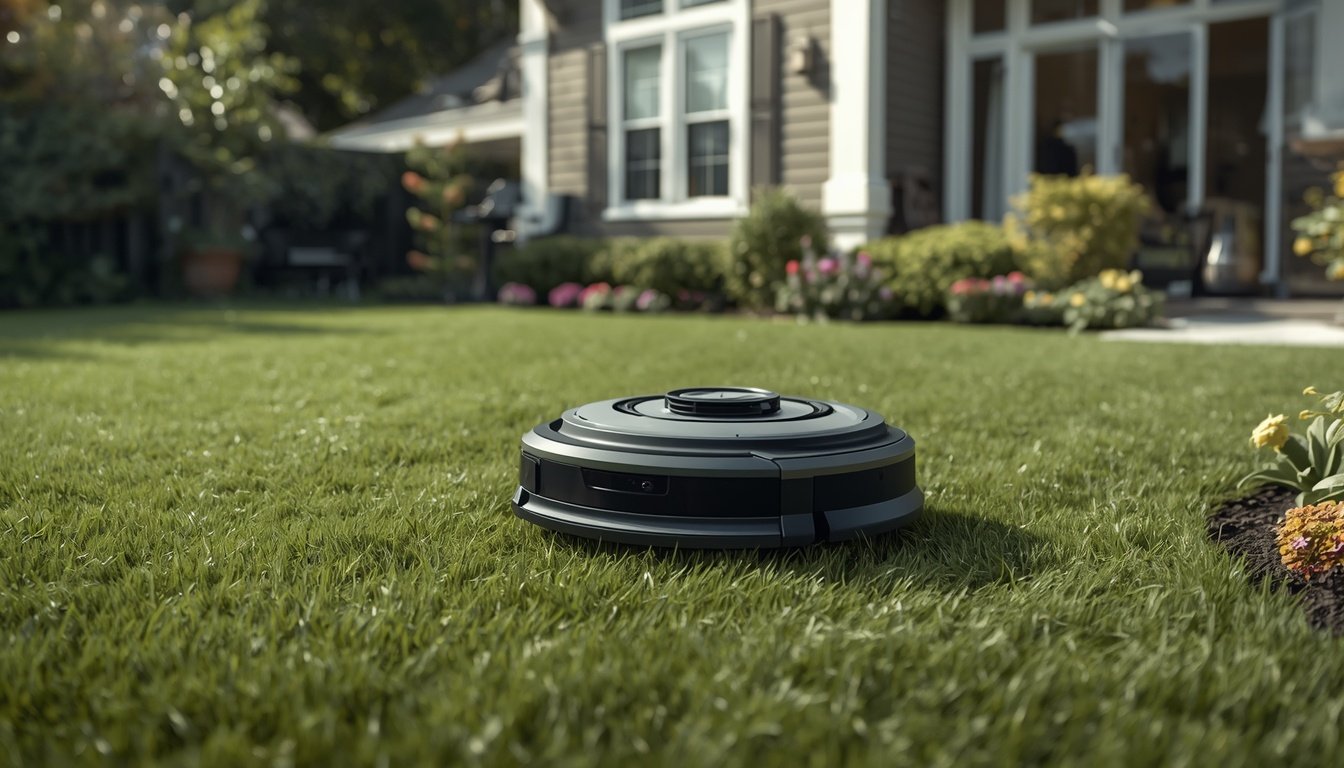
A wire-free robot lawn mower cuts grass automatically without needing a buried perimeter cable around the lawn. Instead of following a physical boundary wire, it uses navigation technology such as RTK positioning, LiDAR, cameras, GPS, onboard sensors, app mapping, or a combination of these systems to understand where it should mow.
For homeowners, the appeal is simple: less manual mowing, less setup work than older wired systems, and a cleaner way to manage lawns that may have slopes, trees, paths, separate zones, or awkward shapes. The challenge is that this is still a confusing product category, so choosing the right mower depends heavily on lawn size, terrain, navigation type, obstacle handling, setup requirements, and budget.
What This Guide Covers
This guide explains the full landscape of modern boundary-wire-free mowing so you can understand the technology before choosing a product. It covers how these mowers work, where they are useful, what features matter, what limitations to expect, and how to move through the supporting guides on this site.
The most important thing to understand is that not all robotic mowers use the same navigation system. Some rely heavily on RTK positioning, some use LiDAR or camera vision, and some combine several systems to improve accuracy. If you are still at the beginner stage, start with How Do Wire-Free Robot Mowers Work? and Do Robot Lawn Mowers Need Boundary Wire? before comparing individual models.
The goal is not just to find a mower that looks advanced. The goal is to match the mower to your actual lawn: its size, slope, tree cover, obstacles, paths, gates, Wi-Fi coverage, and how much manual trimming you are still willing to do.
How Wire-Free Robot Mower Technology Works
Traditional robotic mowers usually depend on a perimeter wire installed around the lawn. That wire tells the mower where the mowing area begins and ends. A wire-free model replaces that physical cable with a digital boundary or mapped mowing area.
The mapping process varies by brand and model. Some mowers are guided around the lawn once during setup so they can learn the edges. Others build maps using camera vision, LiDAR scanning, satellite positioning, or a base station. Once the mowing area is mapped, the mower follows the virtual boundary and returns to its charging station when needed.
RTK systems use a base station and satellite positioning to create a more precise location reference than basic GPS. LiDAR systems scan the surroundings to help the mower understand shapes, trees, garden edges, and obstacles. Camera-based systems use visual recognition to identify lawn areas and hazards. For a deeper breakdown of these systems, see RTK and LiDAR Explained for Robot Lawn Mowers.
The best systems do not rely on one feature alone. A mower that combines positioning, vision, obstacle detection, app mapping, and good wheel traction is usually better suited to real-world lawns than a mower designed only for flat, open grass.
Common Use Cases
Wire-free robotic mowers are most useful for homeowners who want regular lawn maintenance without manually mowing every week. They are especially appealing when the lawn is large enough to be a chore but not so rough or overgrown that it needs heavy-duty equipment.
Small lawns can benefit because a compact mower can keep the grass consistently trimmed with very little effort. Larger lawns can benefit because high-capacity models may reduce hours of mowing time across the season. Sloped lawns may need an AWD or high-traction model, while tree-heavy lawns may need stronger obstacle detection and navigation that can cope with shade or weaker satellite visibility.
They are also useful for multi-zone lawns, front and back yards, lawns split by paths, and properties where the owner wants a cleaner setup than buried wire. If your lawn has multiple sections or unusual boundaries, the guide on finding the right mower for your lawn size and type is a good next step.
The strongest use case is routine maintenance. These machines are not designed to replace a brush cutter, remove heavy debris, fix poor drainage, or rescue an overgrown lawn. They work best when the lawn is already reasonably maintained and the mower can run often enough to trim small amounts at a time.
Key Factors to Consider
- Lawn size and coverage rating: choose a mower with enough capacity for the real mowing area, not just the advertised maximum.
- Navigation system: compare RTK, LiDAR, camera vision, GPS, and hybrid systems based on your lawn layout.
- Slope handling: steep or uneven lawns may need AWD, better traction, and a higher slope rating.
- Tree cover and obstacles: shaded yards, garden beds, toys, pets, and paths all affect mower choice.
- Setup and app control: check whether the mower needs a base station, clear sky view, Wi-Fi, Bluetooth, cellular connection, or manual mapping.
The best choice depends on the problem you are solving. A simple open lawn does not need the same mower as a large property with trees, slopes, narrow passages, and separate zones. Paying more can make sense when the extra money buys better navigation, stronger motors, larger battery capacity, AWD traction, or better obstacle avoidance.
Choosing the Right Option
Start with your lawn, not the mower. Measure or estimate the mowing area, then look at the shape of the lawn, the steepest slopes, the number of zones, and any areas where the mower may struggle. A mower that looks impressive on paper can still be the wrong choice if it cannot handle your layout.
For a simple small lawn, a lower-capacity wire-free model may be enough. For a large lawn, look for stronger battery capacity, larger coverage rating, reliable docking, and efficient path planning. For slopes or uneven ground, traction and wheel design matter as much as navigation. For lawns with trees, the navigation system becomes especially important because some positioning systems may struggle when signal visibility is reduced.
Money pages should be used after you understand the category. A buyer who wants the broadest starting point should compare options in Best Wire-Free Robot Lawn Mowers. If the main priority is avoiding perimeter wire entirely, use Best Robot Lawn Mower Without Perimeter Wire.
Do not choose only by brand name. Match the model to your use case: small lawn, large lawn, slope, trees, complex layout, obstacle avoidance, or budget.
Limitations and Considerations
Wire-free mowing is convenient, but it is not perfect. Some mowers still need careful setup, accurate mapping, firmware updates, good charging station placement, and occasional troubleshooting. A poor setup can cause missed areas, boundary errors, docking problems, signal loss, or repeated stuck points.
Edges are another realistic limitation. Many robotic mowers can maintain the main lawn very well, but they may still leave narrow strips near fences, walls, raised borders, garden beds, or tight corners. Most homeowners should expect to use a line trimmer occasionally.
Weather also matters. Wet grass, mud, steep damp slopes, fallen leaves, twigs, and uneven patches can reduce performance. A mower may be weather resistant, but that does not mean mowing in every condition is a good idea.
Cost should also be viewed honestly. The purchase price is only part of ownership. Replacement blades, accessories, protective covers, repairs, batteries, and possible subscriptions can all affect long-term value. Before buying, read Are Wire-Free Robot Mowers Worth the Cost?.
Guide to This Site
- How Do Wire-Free Robot Mowers Work?
- RTK and LiDAR Explained for Robot Lawn Mowers
- Find the Right Wire-Free Robot Mower for Your Lawn Size and Type
- How to Install a Wire-Free Robot Mower
- Wire-Free Robot Mower Troubleshooting Guide
- Best Robot Lawn Mower Without Perimeter Wire
- Best Wire-Free Robot Lawn Mowers